We spent three months in Kuala Lumpur, using it as a base to explore the rest of Malaysia. Here’s what we’d actually recommend, including where to stay, what to eat and what’s worth your time.
If you’re planning a wider trip, you can find more of our Malaysia guides here.
I appreciate your patience with the ads, they help cover the costs of maintaining the blog.
Practical things to know before visiting Kuala Lumpur
- Kuala Lumpur is hot and humid year-round, with regular thunderstorms that usually pass within an hour.
- The MRT and LRT systems are clean, affordable and easy to navigate, with women-only carriages available.
- Grab is widely used and generally cheap and reliable, especially for shorter journeys or when it’s too hot to walk.
- Cards are widely accepted in malls and restaurants, but smaller places and street food stalls often prefer cash.
- Malaysia is a Muslim-majority country. Kuala Lumpur is modern and relaxed, but it’s still worth dressing more modestly in certain areas, particularly when visiting religious sites.
- Malaysia uses the same plug type as the UK, so you won’t need an adaptor if you’re travelling from there.
Getting to Kuala Lumpur
Kuala Lumpur is well connected internationally, with most visitors arriving via Kuala Lumpur International Airport. From the airport, the quickest way into the city is via the KLIA Express train, which takes around 30 minutes to KL Sentral. Alternatively, Grab is widely available and often more convenient if you are travelling with luggage.
Entry requirements for Kuala Lumpur (Malaysia)
If you’re visiting from the UK, you can stay in Malaysia for up to 90 days visa-free, which is one of the reasons we chose Kuala Lumpur as a base. Malaysia also requires an online arrival card (MDAC), which needs to be completed before arrival. It’s a quick form, but easy to miss if you’re not aware of it. You’ll also need:
- A passport valid for at least 6 months
- Proof of onward travel (rarely checked, but worth having)
Where to stay in Kuala Lumpur
We stayed in three different apartments over three months, all booked through Airbnb. Two of them we would recommend, and one we wouldn’t. Most apartments in Kuala Lumpur offer good value, often with pools, gyms and security included, which makes it a comfortable place to stay longer term.
- Bukit Bintang is best for first-time visitors, food and nightlife
- KLCC is close to the main landmarks
- Other areas (like Bangsar / Mont Kiara) are better for longer stays, more local feel
What to eat in Kuala Lumpur
Food in Malaysia was one of the biggest surprises for us. We didn’t know much going in, but it quickly became one of the highlights, especially with how strong the food scene is in Kuala Lumpur. These are some of our favourite dishes from our three months there that we kept going back to.
Kaya toast and half boiled eggs
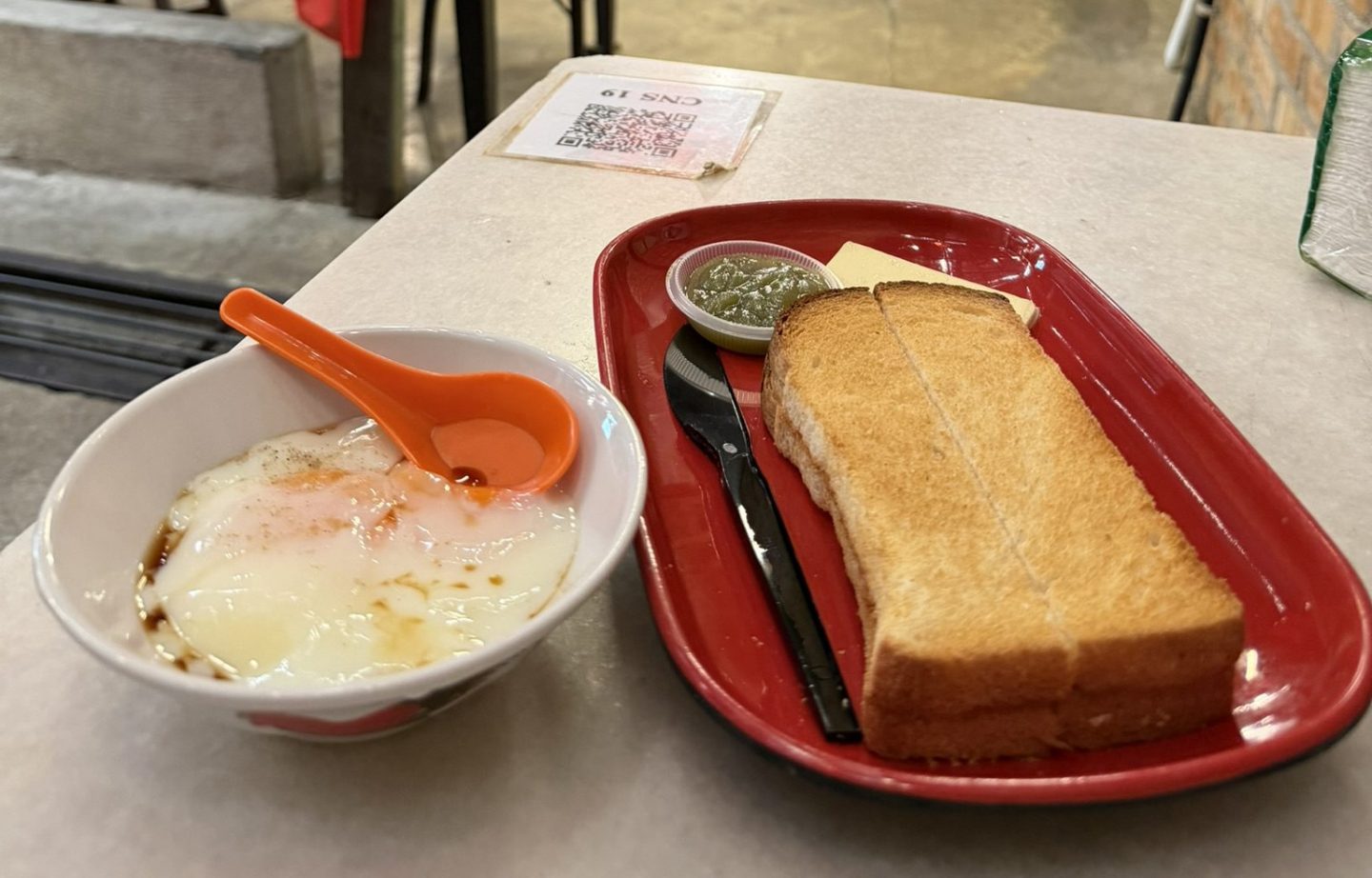
One of the biggest surprises for us was kaya toast and half-boiled eggs, which quickly became a go-to breakfast, a bit like eggs and soldiers with a Malaysian twist.
This breakfast has its roots in Malaysia’s kopitiam culture, influenced by Chinese and British traditions. Kaya, a coconut jam scented with pandan, is spread over toast with a generous slab of butter and served with soft eggs, seasoned with soy sauce and Sarawak white pepper.
Our favourite spot was a small place in Chinatown called Kafei Dian, which also sells its own kaya jam. The nearest MRT is Pasar Seni (exit A). We even bought our own half egg boiler because we liked it that much. If you end up in the same position, Yat Hang Trading is about five minutes away and sells egg boilers, along with the bowls and spoons typically used for it.
What to order: number 4 with number 25 and a drink of choice.
Nasi Lemak and Redang
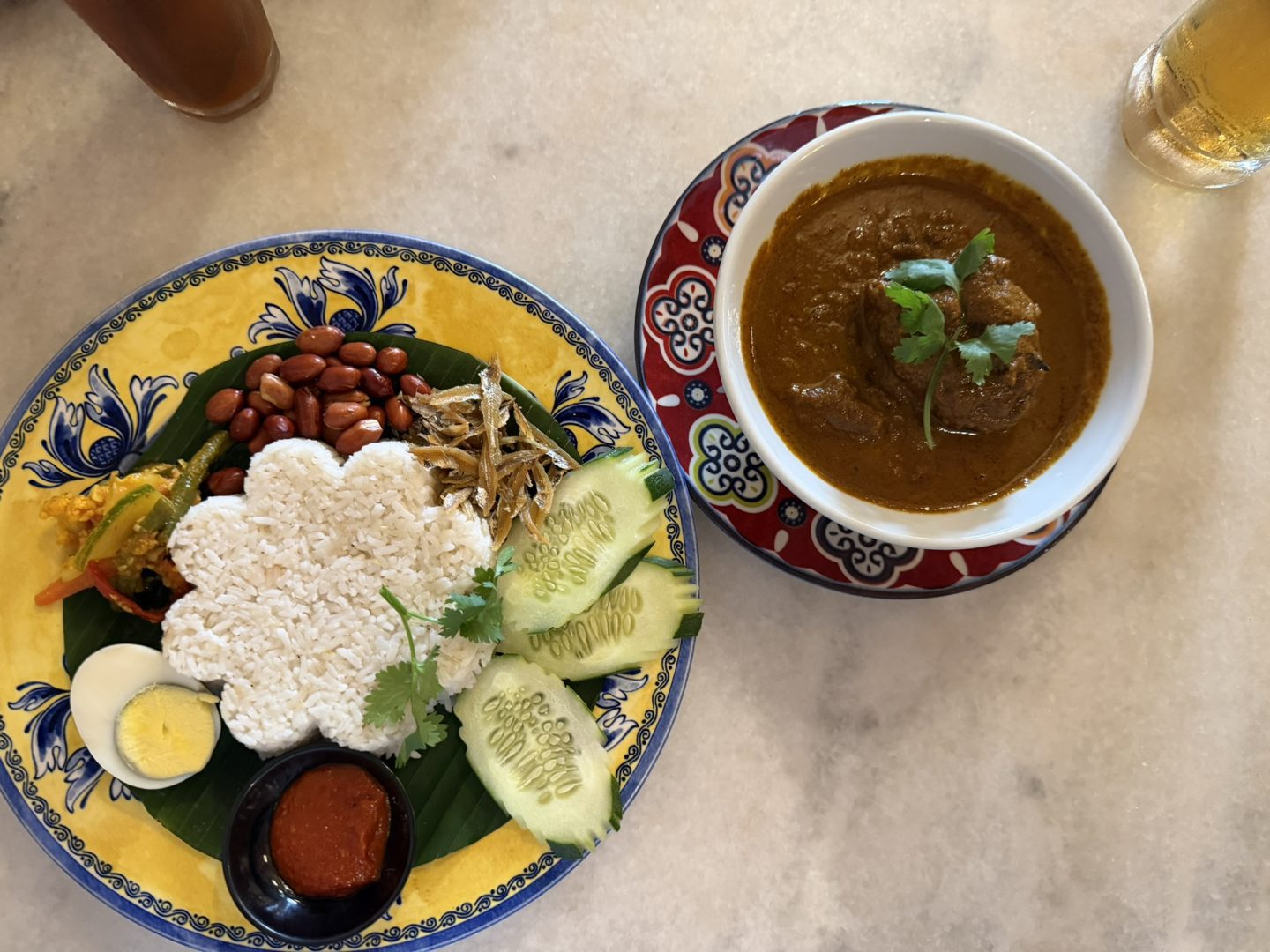
Nasi lemak is one of the most common dishes you’ll come across in Malaysia. It’s made up of coconut rice, sambal, egg, anchovies and peanuts, often served with chicken or beef rendang. Our favourites were from Wanjo and Madam Kwan’s, but we did a cooking class to learn how to prepare this famous dish.
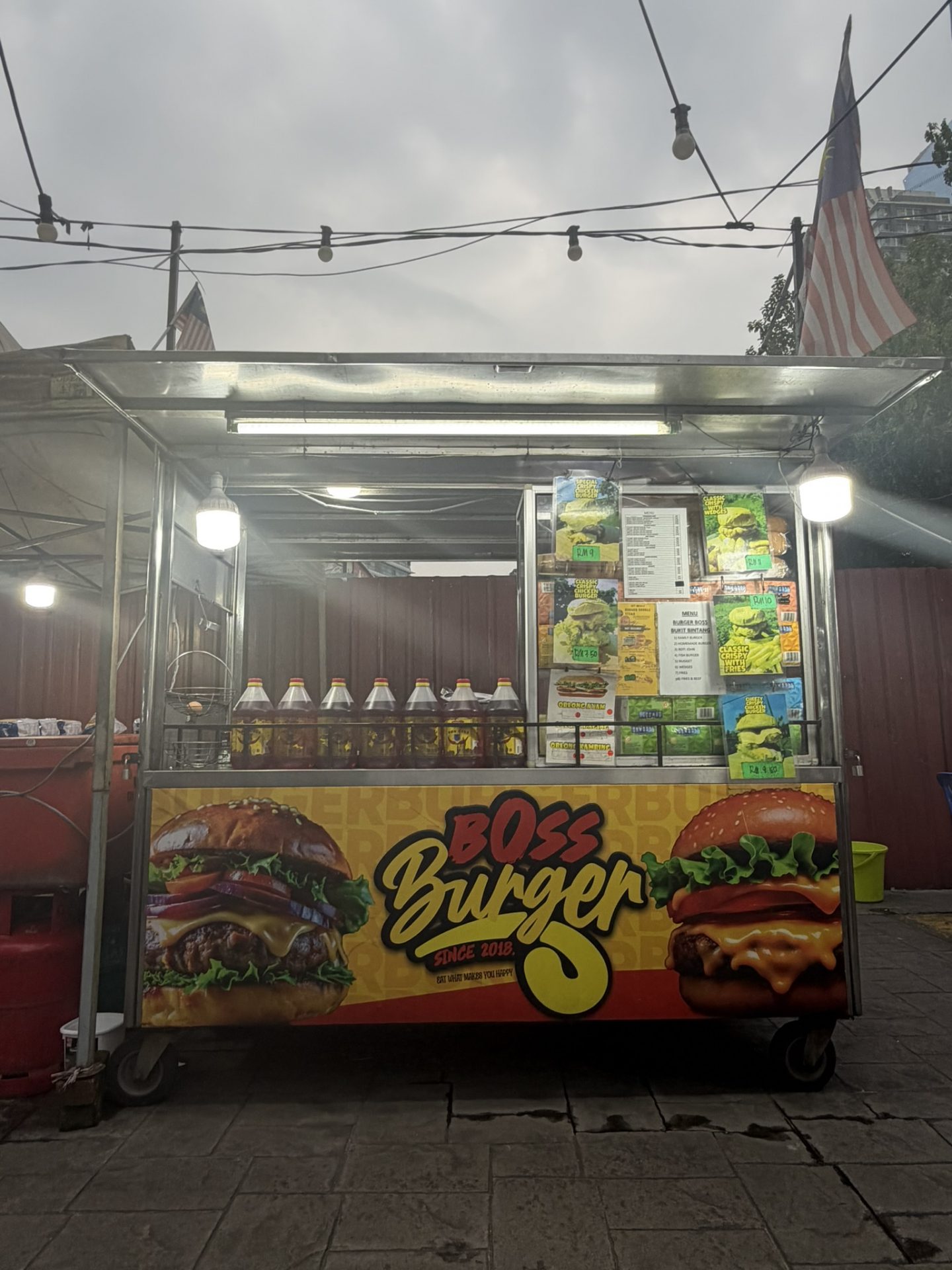
Ramly Burger
The Ramly burger is one of Malaysia’s most recognisable street foods, originally sold from a roadside stall in the 1970s by Ramly Mokni and now found all over the country, from supermarkets to late-night street vendors.
It’s typically made with toasted buns, a patty wrapped in egg, and finished with plenty of sauce, with most vendors sticking to that same method even if they add their own variations. We tried ours from Burger Boss on Jalan Tong Shin in Bukit Bintang, right at the end of Jalan Alor, paying 11 ringgit (cash only) for a double cheeseburger, preferring the beef over the chicken.
Mon Chinese Beef Roti
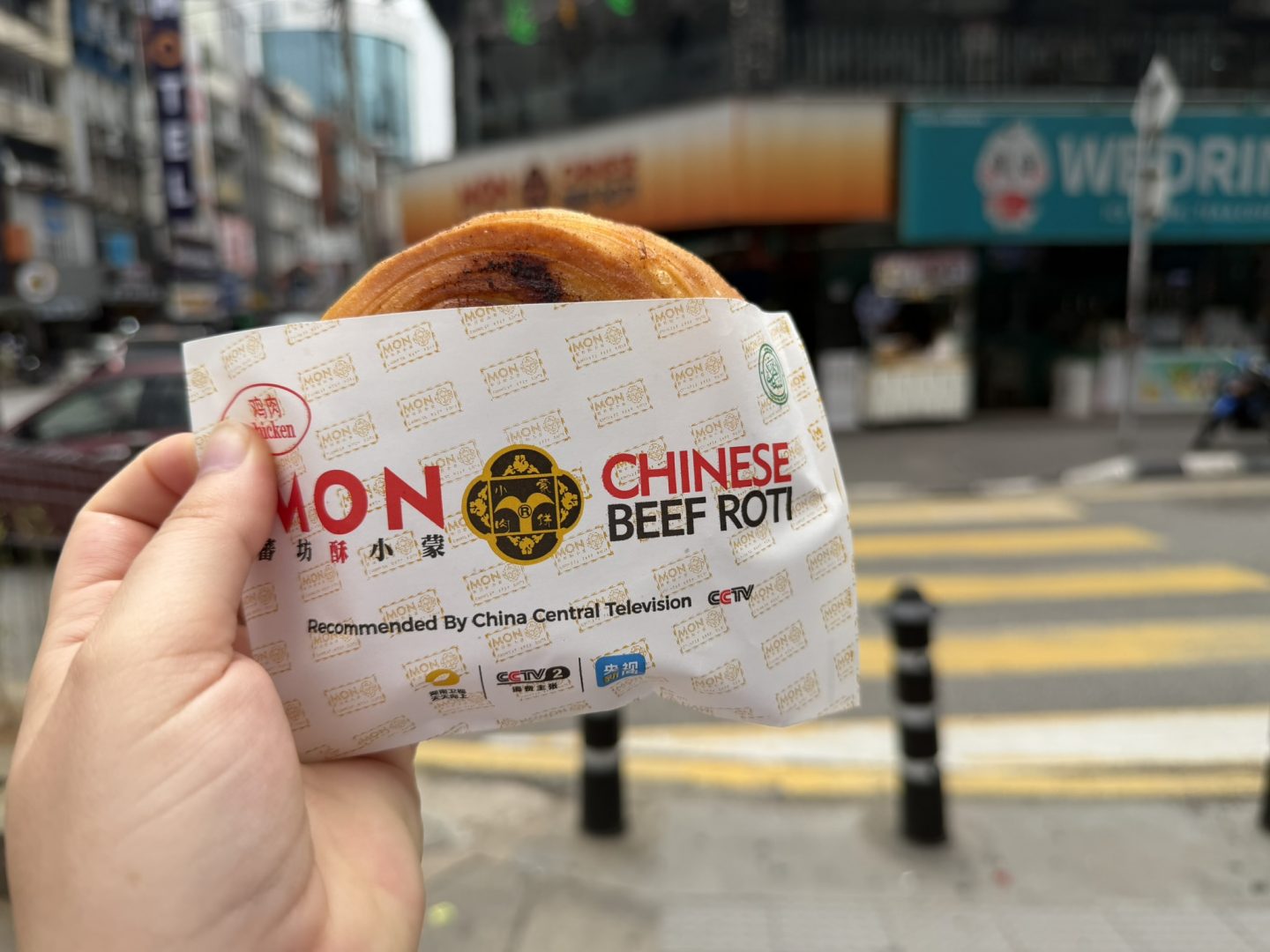
Mon Pot has multiple locations across Kuala Lumpur, with the most well-known one in Bukit Bintang, though there’s also a branch in Suria KLCC. The dough is stretched, filled (usually with chicken or beef), then folded and crisped up. It’s fast, cheap and made fresh daily, which makes it an easy on-the-go street food snack, just take care as it’s served piping hot. We tried both chicken and beef, but preferred the beef.
Roti Canai
Roti canai ended up being one of our favourite dishes, and something we found ourselves actively seeking out across Malaysia. It’s a type of flatbread, cooked on a hot plate until crisp on the outside but still soft inside, usually served with a side of curry for dipping. You’ll see it everywhere, from small local spots to more established restaurants, often eaten for breakfast but just as easy to find later in the day.
Secret Food Tour
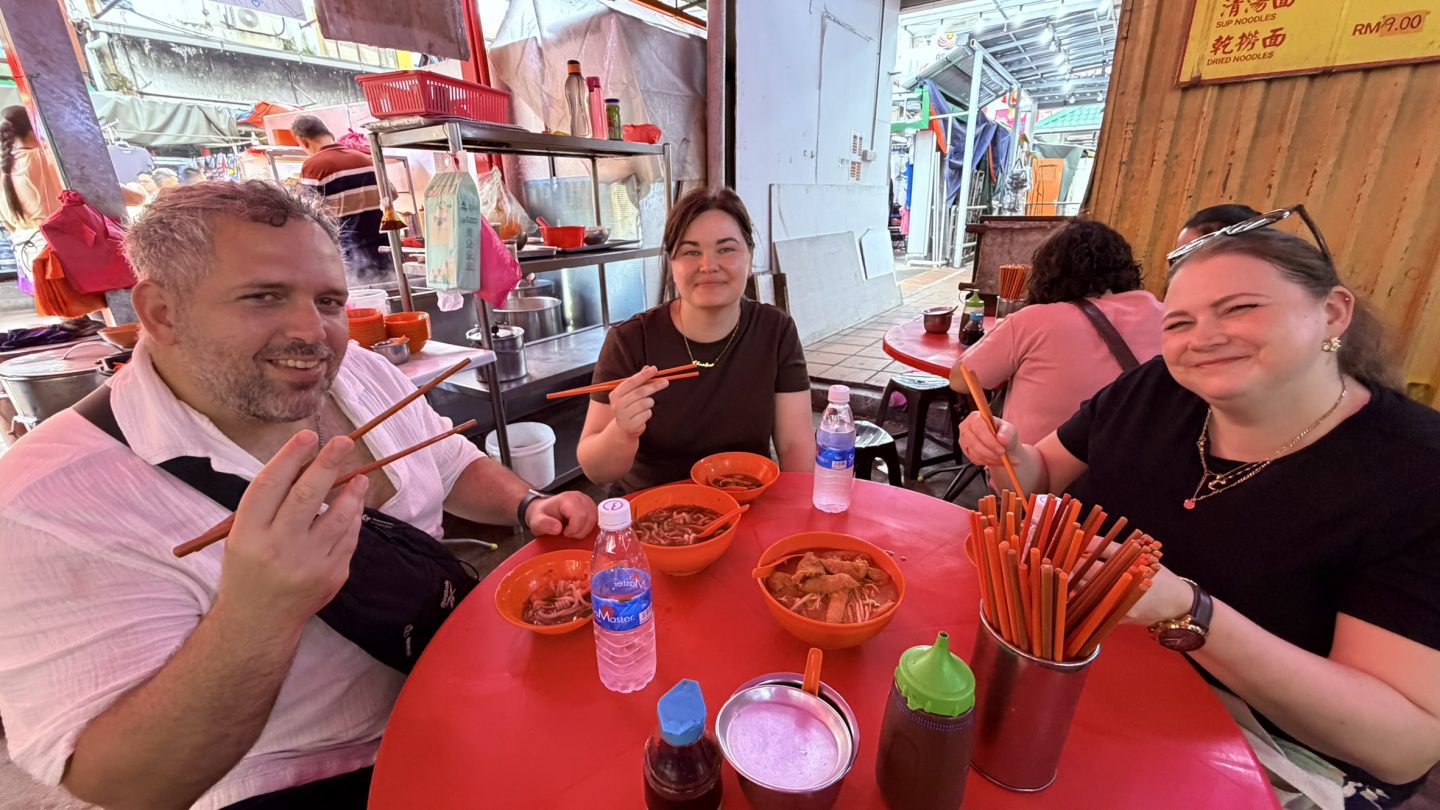
If you’re short on time, I can’t recommend this food tour enough. The price seems high at first, but it makes sense when you’re working your way through 14 full-sized dishes. It gave us the confidence to try places we would have otherwise overlooked or been too unsure to go into. Since Malaysia is a mix of Malay, Chinese and Indian cultures, the tour covers a bit of all three, which makes it a good introduction to the food scene.
Street Food Markets
Street food markets are hugely popular in Kuala Lumpur, often where you’ll find some of the best food in the most unsuspecting places, and at affordable prices.
Jalan Alor is the most well-known, but it’s more tourist-focused than we expected, and we didn’t find ourselves going back after that first visit. Petaling Street in Chinatown has a similar mix of food and market stalls, but feels a bit more varied, especially in the evening.
Taman Connaught night market is one of the biggest in the city, stretching along a long road with a huge number of food stalls, and only runs on Wednesday evenings. Kampung Baru has more of a local feel, with a focus on traditional Malay food, set against the backdrop of the KL skyline.
Most of the time, we just ate wherever we were rather than planning around specific markets, but these are the ones we came across most often.
What to do in Kuala Lumpur
There’s a lot to do in Kuala Lumpur, but most of it is spread across a few key areas, which makes it easy to plan your time.
KLCC
KLCC is Kuala Lumpur City Centre, and where you’ll find some of the most recognisable parts of the city.
Petronus Towers
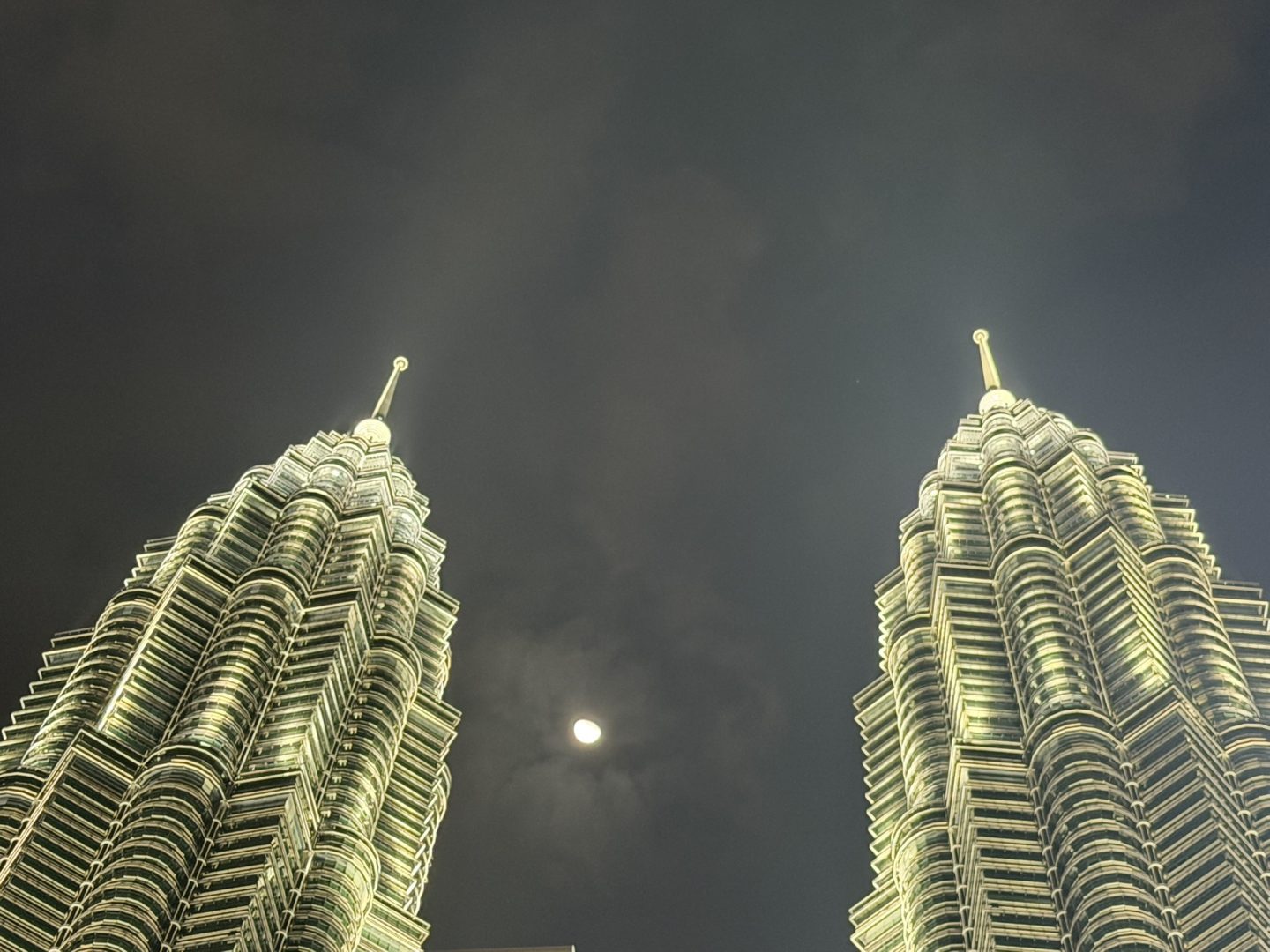
The Petronas Towers are the most recognisable landmark in Kuala Lumpur and one of the tallest twin towers in the world. Standing at 451.9 metres with 88 storeys, it’s hard to miss. As part of our ticket booked via Klook, we visited the world’s highest 2-storey skybridge and the 86th floor observation deck.
The design is based on Islamic geometric patterns, with the floor plan formed from two interlocking squares creating an eight-pointed star, which gives the towers their distinctive shape when viewed from above. There’s also a café inside the towers, along with Suria KLCC at the base, which is a large shopping mall with plenty of places to eat if you want to spend a bit more time in the area.
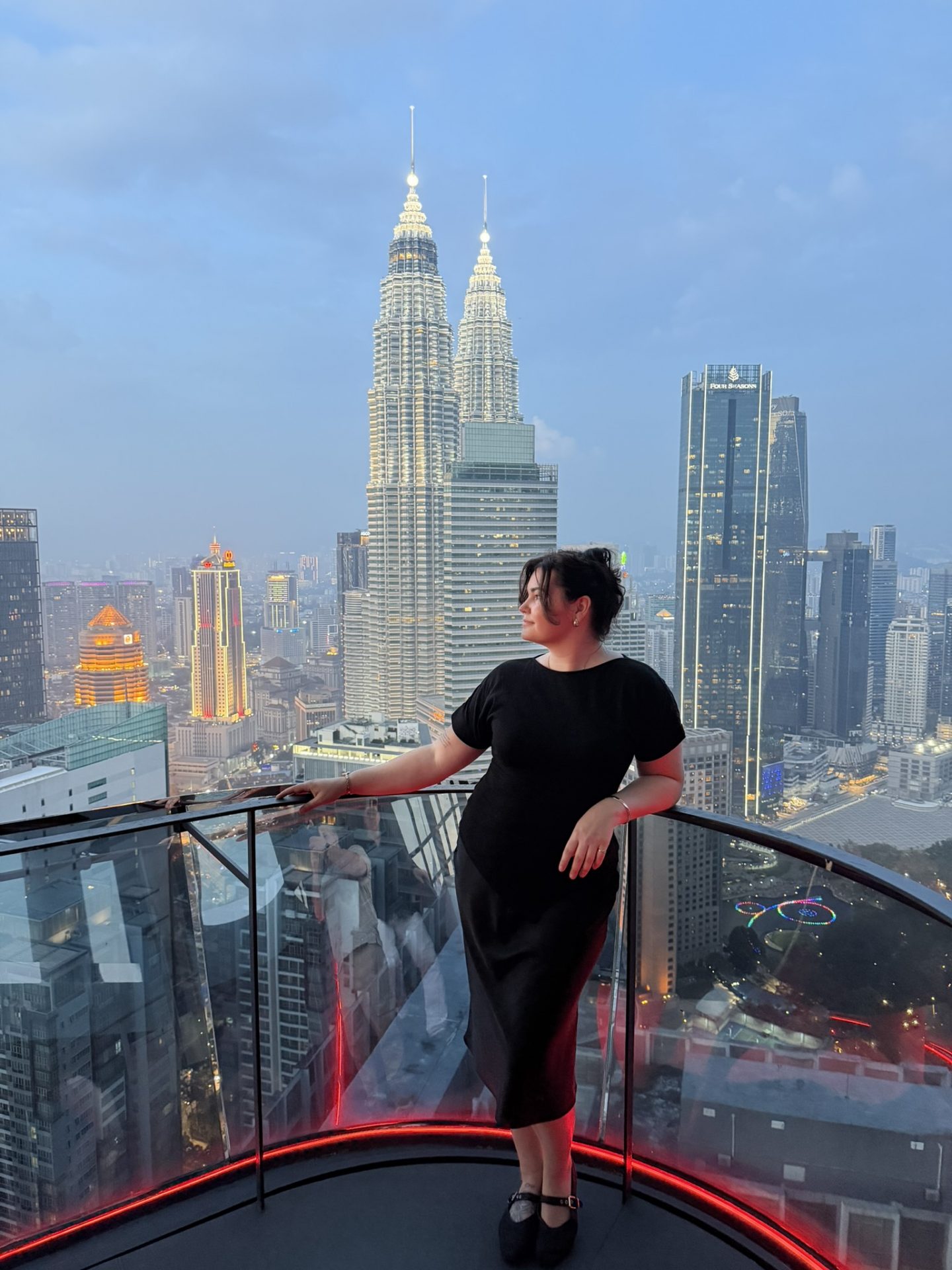
There are also a number of rooftop bars nearby which offer great vantage points. We went to Sky51 at EQ, which has a full view of the skyline and the towers, and it’s easy to see why it’s considered one of the better rooftop spots in the city. Marini’s on 57 is another well-known restaurant right next to the towers, with Michelin recognition.
Even after three months, we didn’t get tired of seeing them, it’s just as worth seeing in the daytime as it is at night.
If you are booking tickets, it’s worth checking prices across platforms. We used TopCashback when booking through Klook and got £5.08 back on a £50.84 purchase.
KLCC Park and Lake Symphony Light Show
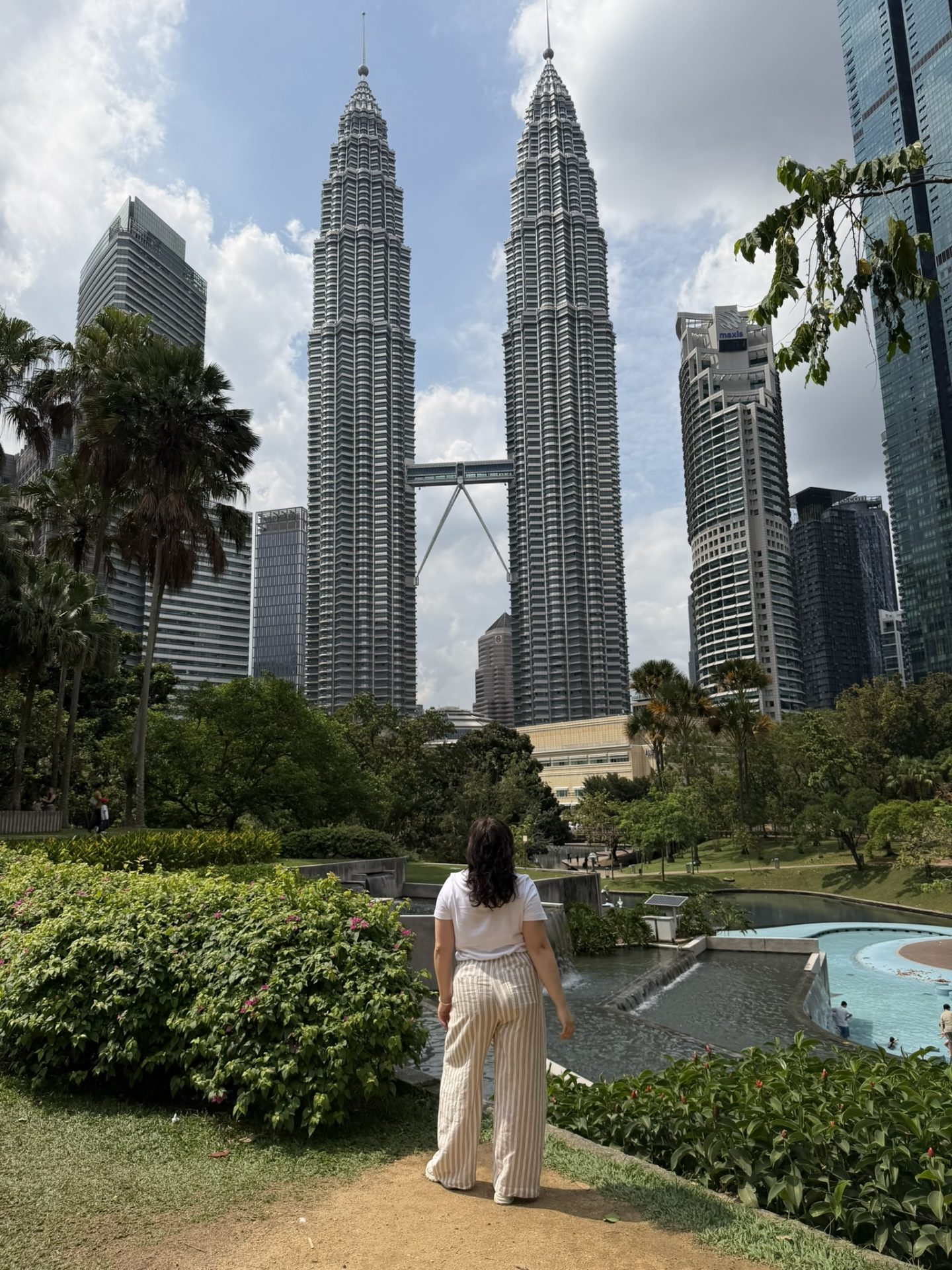
KLCC Park sits directly next to the towers and is a good place to take a break from the city, with a clear view of the Petronas Towers from a bit further back, which makes it a good spot for photos without being right in the middle of the crowds. There’s a large fountain and light show in the evenings, which usually runs at 8pm, 9pm and 10pm, though times can vary slightly. It’s worth sticking around for one of the later shows when the towers are fully lit up.
KL Tower
KL Tower is a 421-metre telecommunications and observation tower offering panoramic views across the city. You can book tickets depending on your time and budget, with a few different options available. The observation deck is indoors and sits lower down, while the open-air sky terrace is higher up, with the option to add the glass box for an extra cost.
We also tried the Orbit revolving restaurant, which slowly rotates to give a full 360 view while you eat. It’s an all-you-can-eat setup over around two hours and is roughly the same price as the sky terrace, although you’ll need to pay extra if you want a window seat, and drinks beyond tea or coffee are also additional. It’s a nice way to sit and take in the views, especially on a weekday when it’s quieter and slightly cheaper, although the food itself was fairly average.
Chinatown
Kuala Lumpur’s Chinatown is definitely worth a visit, with a mix of markets, older buildings and newer cafés all within a relatively small area.
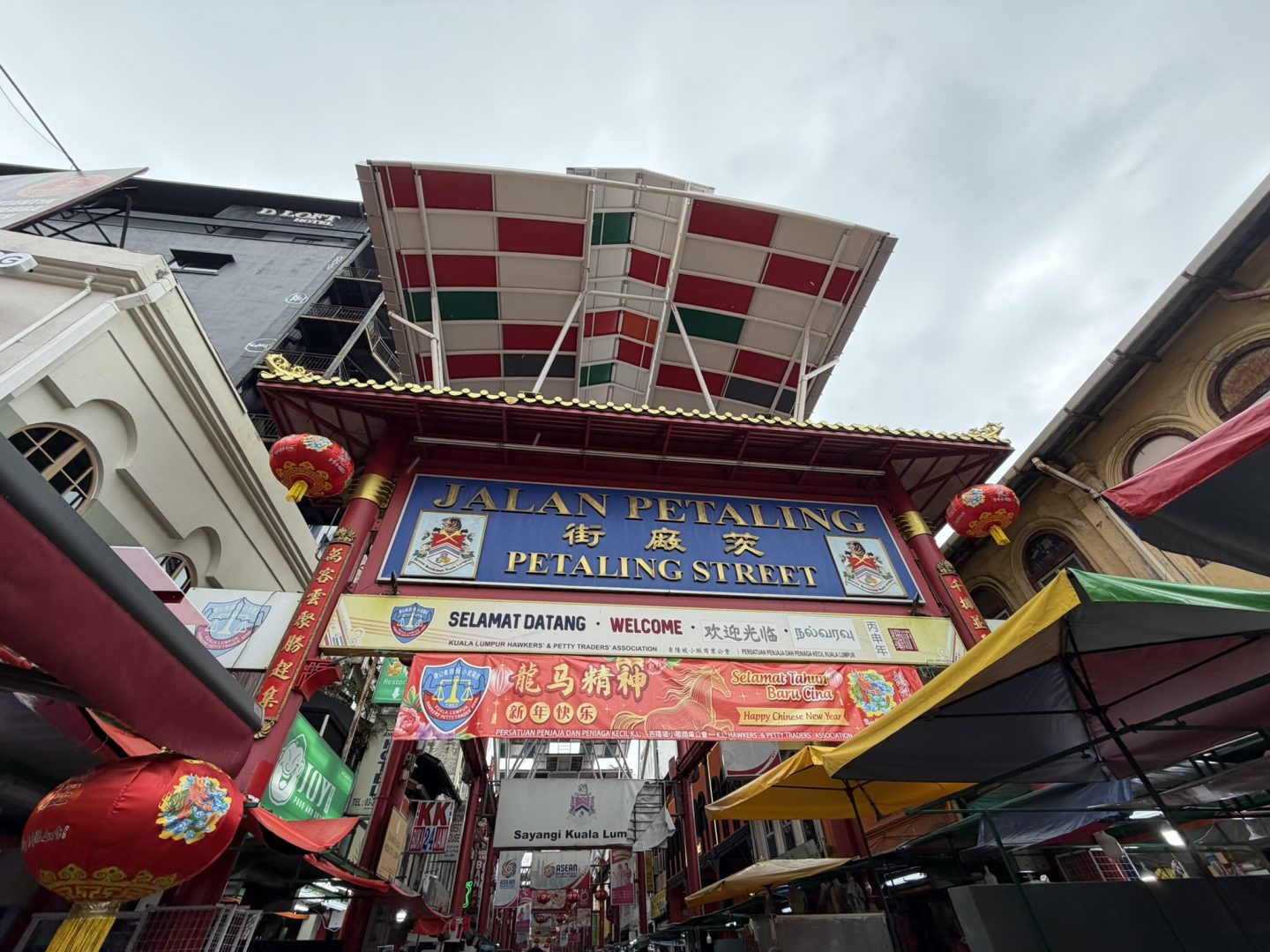
Petaling Street is the centre of it all, lined with stalls and street food, especially in the evening. It’s busy and a bit chaotic, but that’s part of the appeal. Notable vendors include places like Koon Kee Soy Bean Milk, along with one of the apam balik stalls on Petaling Street, usually the one with a queue and making them fresh in front of you. You’ll also find Kim Lian Kee here, often referred to as the birthplace of Kuala Lumpur-style Hokkien mee, dating back to 1927.
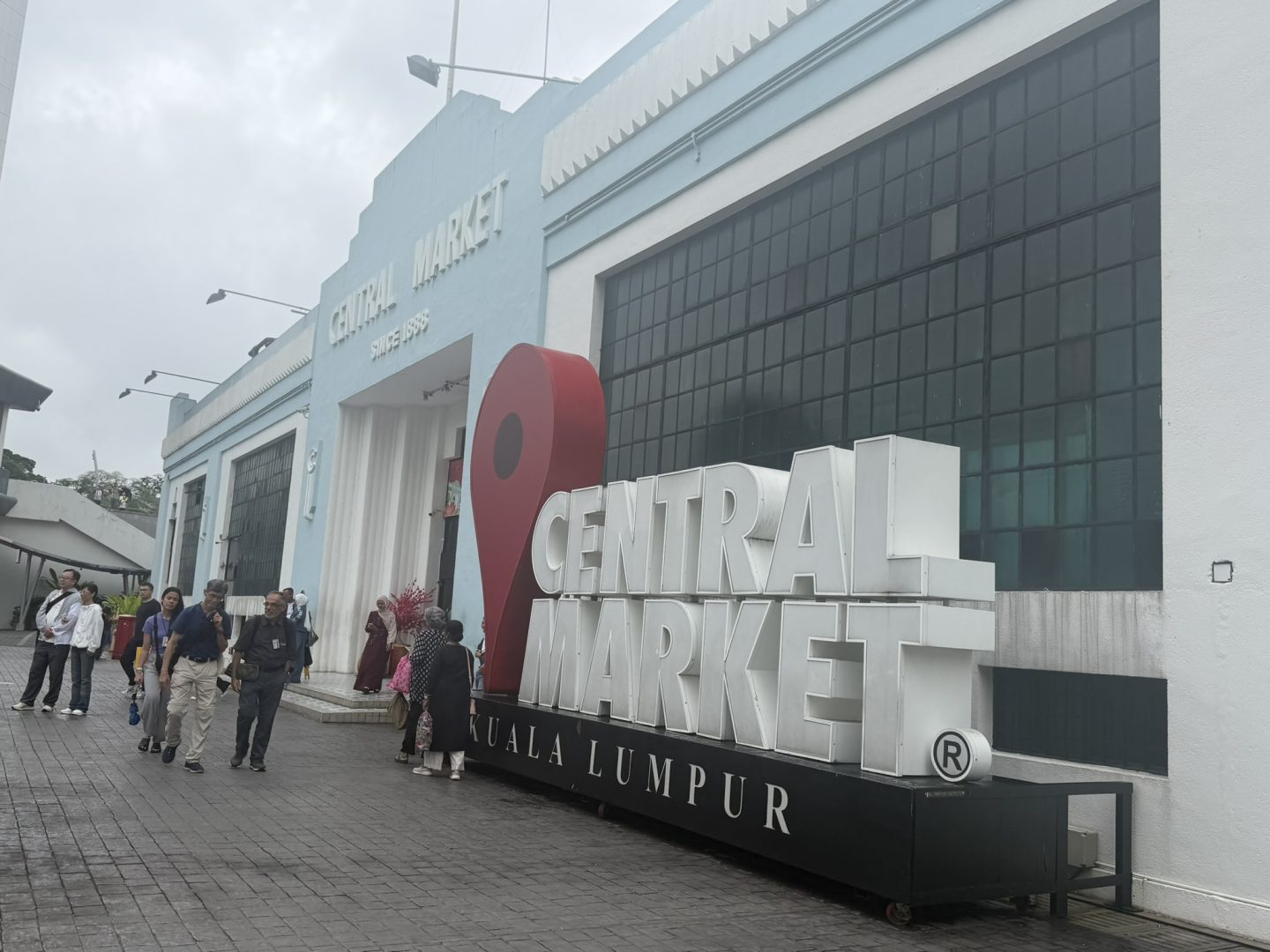
Central Market feels more organised in comparison, with indoor stalls, shops and weekend craft markets that are easier to browse. It originally opened in 1888 as a wet market before being converted into the arts and crafts centre it is today.
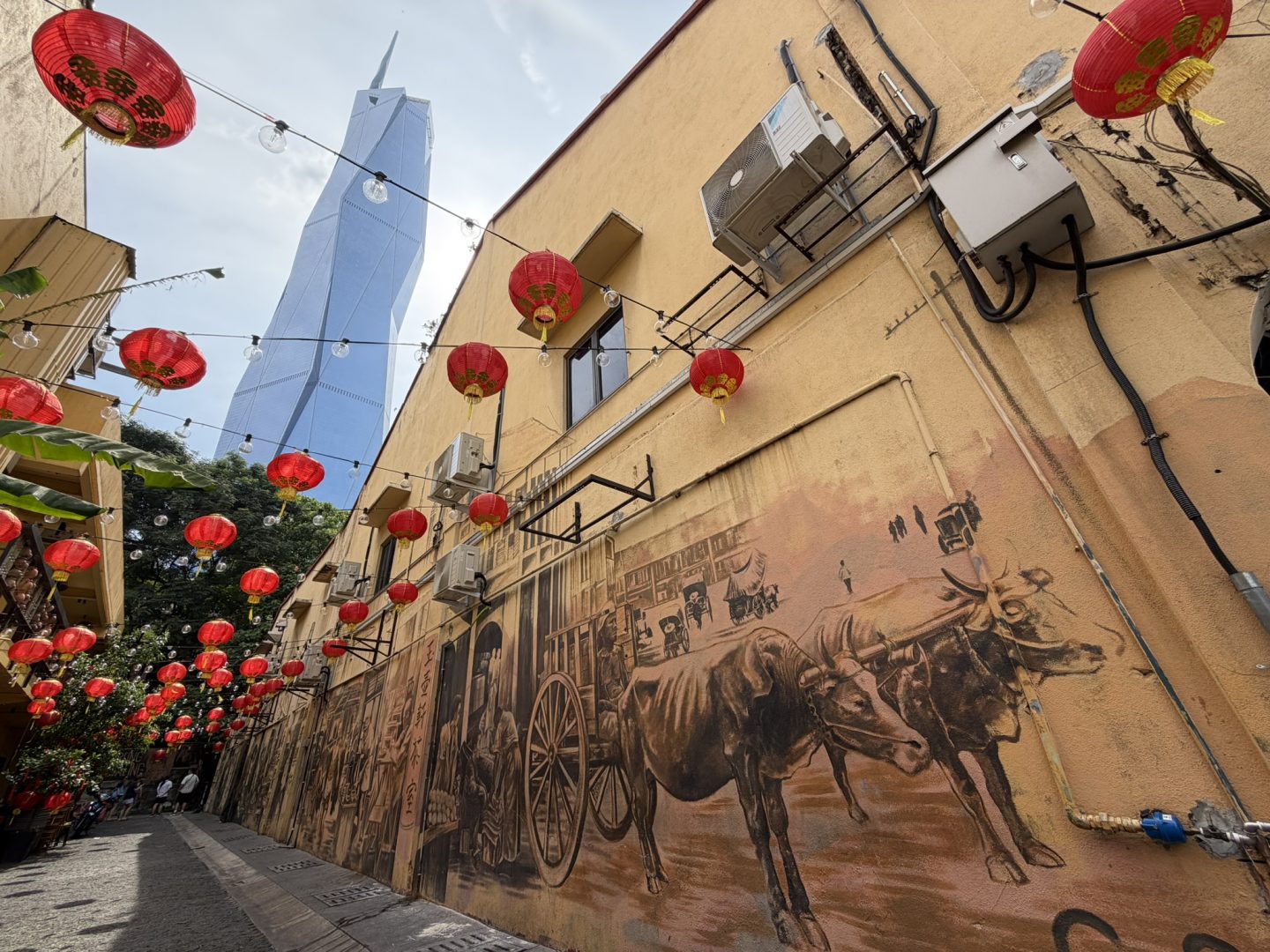
Concubine Lane is a smaller street nearby that’s become more popular in recent years, with a mix of smaller bars and shops. There’s some street art around here as well, and it’s a good place to stop for a drink in the evening.
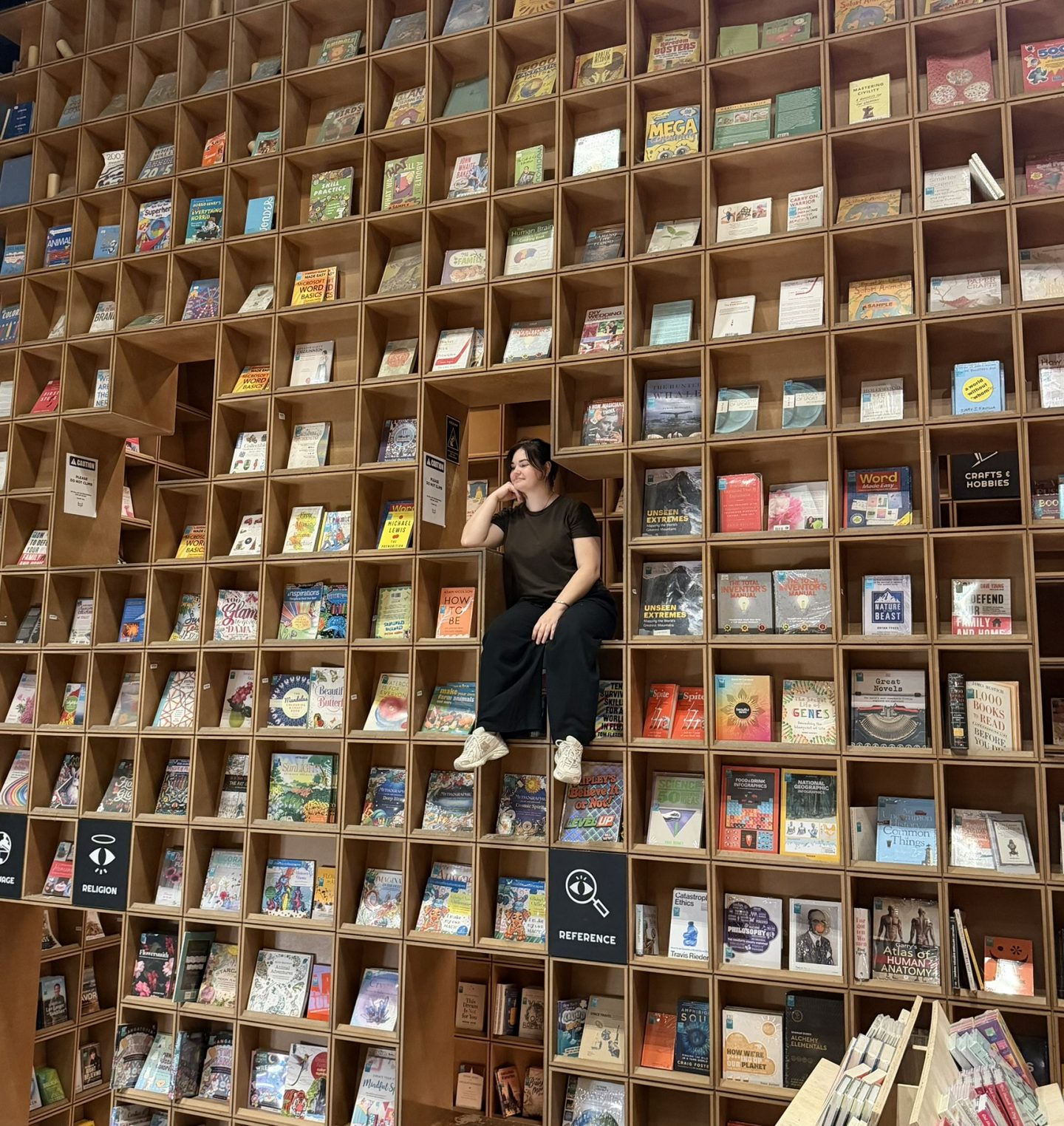
We found ourselves coming back to this area quite a bit, stopping in at places like Jamboo Cafe, known for its alleyway hole-in-the-wall setup that has picked up a lot of attention, and while it is a bit theatrical, it’s a fun stop and only around £5.24 for two drinks. We also went to Niko Neko Matcha and Cookie Crumbs for something sweet. There are also more modern spaces mixed in, like BookXcess inside RexKL, which is worth going into just to see the space itself, and The Zhongshan Building, which has a mix of cafés, shops and creative studios.
Bukit Bintang
Bukit Bintang is a lively shopping district, with a mix of malls, street activity and nightlife that really comes alive in the evening. A short stretch packs in four main malls: Lot 10, Pavilion, Fahrenheit 88 and Sungei Wang (often referred to as Spectrum), giving a good range of options in one area.
Pavilion Mall has a mix of luxury and more affordable brands. On the lower floors, there’s a sizeable food court as well as a Food Merchant for groceries. Don’t miss Hot Crush’s beef wellington, or the teddy bear café (de marzo) if you’re after something more novelty.
Opposite Pavilion is Fahrenheit 88, with Lot 10 just next door. Fahrenheit 88 has a Uniqlo that offers customisation, along with collaborations with local brands, making it a good place to pick up more affordable souvenirs. It’s also home to what’s often described as the world’s largest Sephora by square footage, although it doesn’t feel that different once you’re inside, so don’t be fooled.
At the entrance of Lot 10, there’s a Don Don Donki, which many will recognise as the international version of Japan’s Don Quijote, offering a similar multi-level sensory overload.
The Parent Company (on the first floor of ANSA Hotel) is another one that’s slightly tucked away but worth knowing about. It’s a small shop where you can buy samples from a wide range of perfume, skincare and makeup brands.
Bukit Bintang is also known for its street art, with some of the more decorated alleyways along Jalan Alor, Berangan, Changkat, Rembia and Tengkat Tong Shin. It’s worth stepping off the main roads and walking through a few of these, as there are murals scattered throughout the area.
If you’re looking for something more creative, Jadi Batek is about a 15-minute walk away and offers creative workshops to paint your own tote bag or canvas. You can book ahead or just pick up batik souvenirs if you’re not looking to spend too much time.
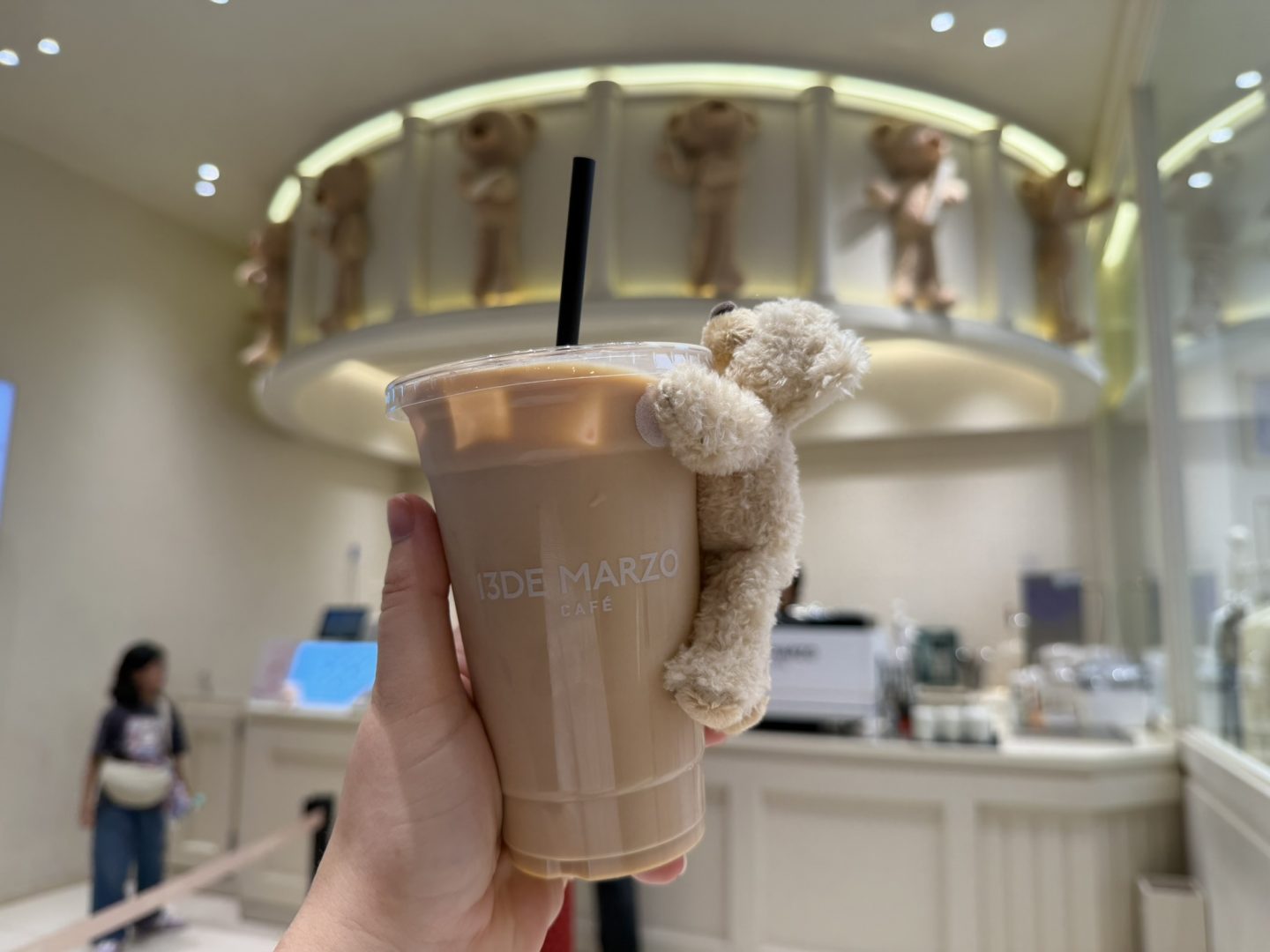
Teddy bear café (de marzo) in Pavilion
Merdeka Square and Merdeka 118
Merdeka Square is an important historical site in Kuala Lumpur, where Malaysia declared independence in 1957. It’s surrounded by colonial-era buildings and offers a very different feel compared to the more modern parts of the city.
Right next to Merdeka Square, the Sultan Abdul Samad Building, with its clock tower, is one of the more photogenic parts of the city. It’s worth stepping inside if it’s open, both for a break from the heat with the air conditioning and for a look at the small shop inside. Nearby is the River of Life waterfront redevelopment project along the Klang River, designed to clean up and transform the area around one of the oldest mosques in Kuala Lumpur, Masjid Jamek. It’s worth walking through at night when the mist effect comes on and the mosque is lit up.
You can’t miss Merdeka 118, now the second tallest building in the world. The name “Merdeka” translates to independence or freedom, referencing the same moment in history. Completed in 2023, the tower is now home to the Park Hyatt, with an observation deck expected to open soon. We spent the evening on Level 75 at Merdeka Grill, which has wide views over Kuala Lumpur and gives you a chance to experience the building before the observation deck opens. At the moment, the only way to go up is through the hotel, restaurants or bars.
Thean Hou Temple
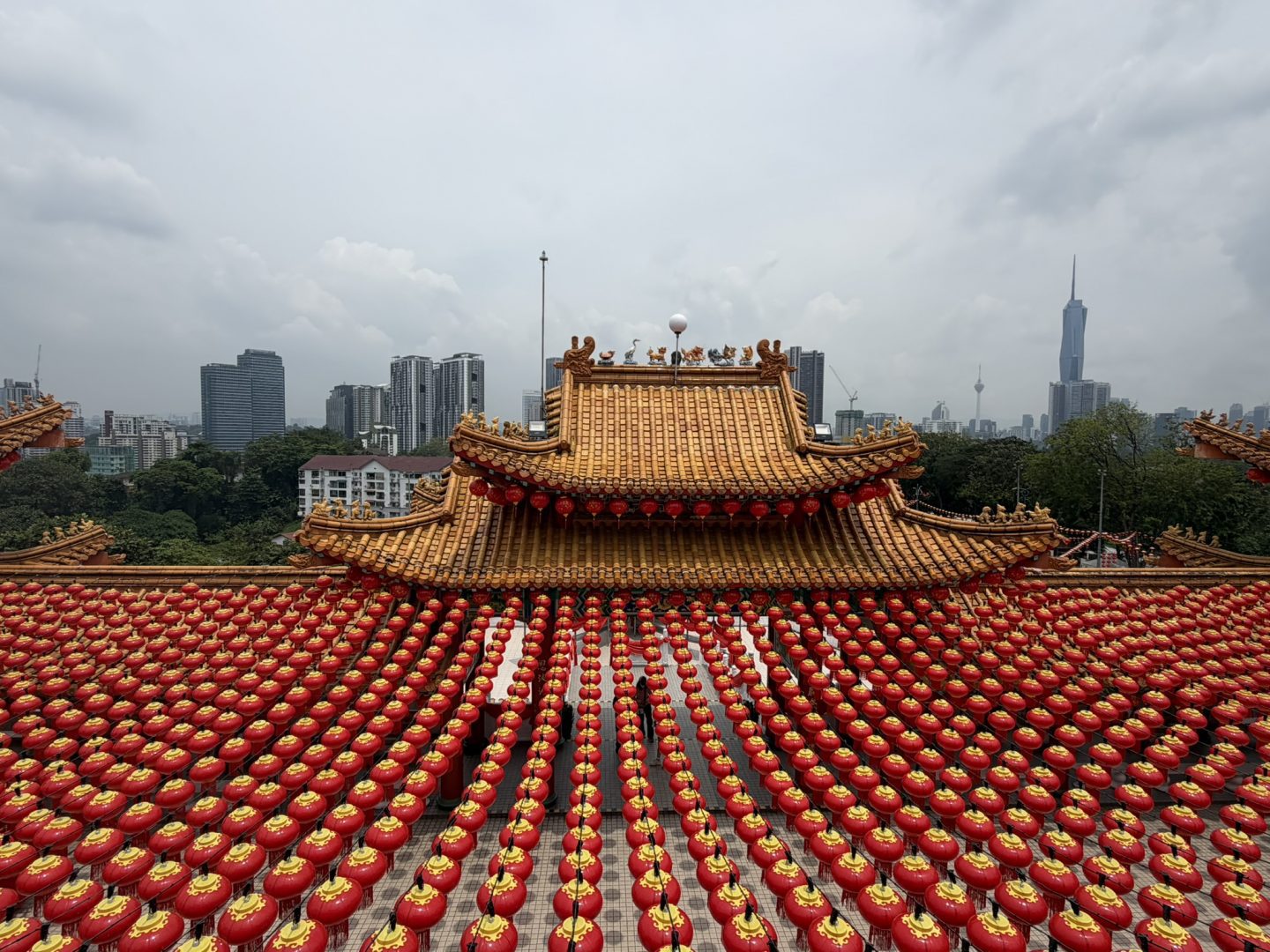
Thean Hou Temple is one of the oldest and largest Chinese temples in Southeast Asia. It sits slightly outside the main city centre, and particularly good to visit in the evening when the lanterns are lit up. It’s free to visit, and be sure to pick up a fortune or make a small donation.
Park and green spaces
Kuala Lumpur isn’t just malls and skyline, there are also a few green spaces worth visiting if you want a break from the city.
KL Forest Eco Park sits right next to KL Tower and is one of the oldest forest reserves in Malaysia. The canopy walk is the main draw, giving you a different view of the city surrounded by greenery, although it’s fairly short. The Perdana Botanical Gardens are larger and more relaxed, with walking paths, lakes and different themed areas, including an orchid garden.
Supermarkets
Eating out in Kuala Lumpur can often be cheaper than cooking, but there were still times we wanted to stock up on basics in our Airbnb.
Cold Storage and Village Grocer are the more premium options, usually found in malls, and are closer to what you’d expect from supermarkets back home, but prices are higher. Food Merchant sits somewhere similar, with a good range, especially if you’re staying near Pavilion.
NSK is more of a local wholesale-style supermarket, noticeably cheaper but less polished, and better if you’re doing a bigger shop rather than just picking up a few things.
For smaller bits, 7-Eleven is everywhere and surprisingly useful, while Guardian and Watsons are the main pharmacy chains for things like toiletries, skincare and basic health items.
Souvenirs
OldTown White Coffee is one of the more recognisable Malaysian brands, originally from Ipoh and inspired by traditional kopitiam coffee culture that’s still running today. “White coffee” refers to the roasting method and the way it’s served, typically with condensed milk, giving it a smoother, sweeter taste. The instant sachets are easy to pack and a simple way to bring that style of coffee home, and are available in most supermarkets.
Uniqlo often runs collaborations with local brands like Niko Neko Matcha and Oriental Kopi, usually in the form of t-shirts and tote bags, with some stores also offering in-store customisation. Adidas also releases Malaysia-exclusive items.
Beryl’s Chocolate is a Malaysian brand, founded in 1995, and widely available across the country. Their tiramisu almonds are probably the most well-known, but they also offer a range of flavours like durian and green tea. There are stores across Kuala Lumpur, particularly in Fahrenheit 88 and opposite Kafei Dian in Chinatown.
Kaya jam, especially from places like Kafei Dian, is one of the more specific things to pick up. It’s the coconut jam used in kaya toast and something you’re unlikely to find the same version of elsewhere.
Pandan flavouring is widely available in supermarkets and used in a lot of local desserts, making it an easy way to bring a bit of Malaysian cooking back with you. If you want something more niche, you can pick up a half egg boiler and ceramic bowls from Yat Hang Trading, which ties back to the local breakfast culture.
Batik is a traditional fabric-making technique where patterns are created using wax and dye, resulting in detailed, often colourful designs. Places like Jadi Batek sell more traditional pieces, or you can make your own tote bag if you want something more hands-on.
The Petronas Towers also have their own merchandise, available both inside the towers and in Suria KLCC. Prices are fairly reasonable, making it an easy place to pick up something recognisable without spending too much.
Postcards are widely available across the city and are one of the cheapest souvenirs. Loka Made, found in Central Market, is a well-known local brand for illustrated postcards and small items, with a more distinctive style compared to the generic options. Central Market is one of the better places for smaller items, with stalls selling things like pop sockets, flower clips, bangle watches and bag charms, making it easy to browse and pick up a few things in one go.
Day trips from Kuala Lumpur
There are a few easy day trips from Kuala Lumpur that are worth factoring in if you have the time, most within a couple of hours of the city.
Genting Highlands
Genting Highlands is often referred to as the “Las Vegas of Malaysia”, set up in the hills outside the city. It can be seen from parts of the mainland on a clear day and reached either by Grab or via the cable car.
At the top, there’s a mix of attractions including the pagoda-style Chin Swee Temple, shopping malls, a casino and the outlet centre at the base. It’s also home to the First World Hotel, which holds the record for the largest hotel in the world by number of rooms.
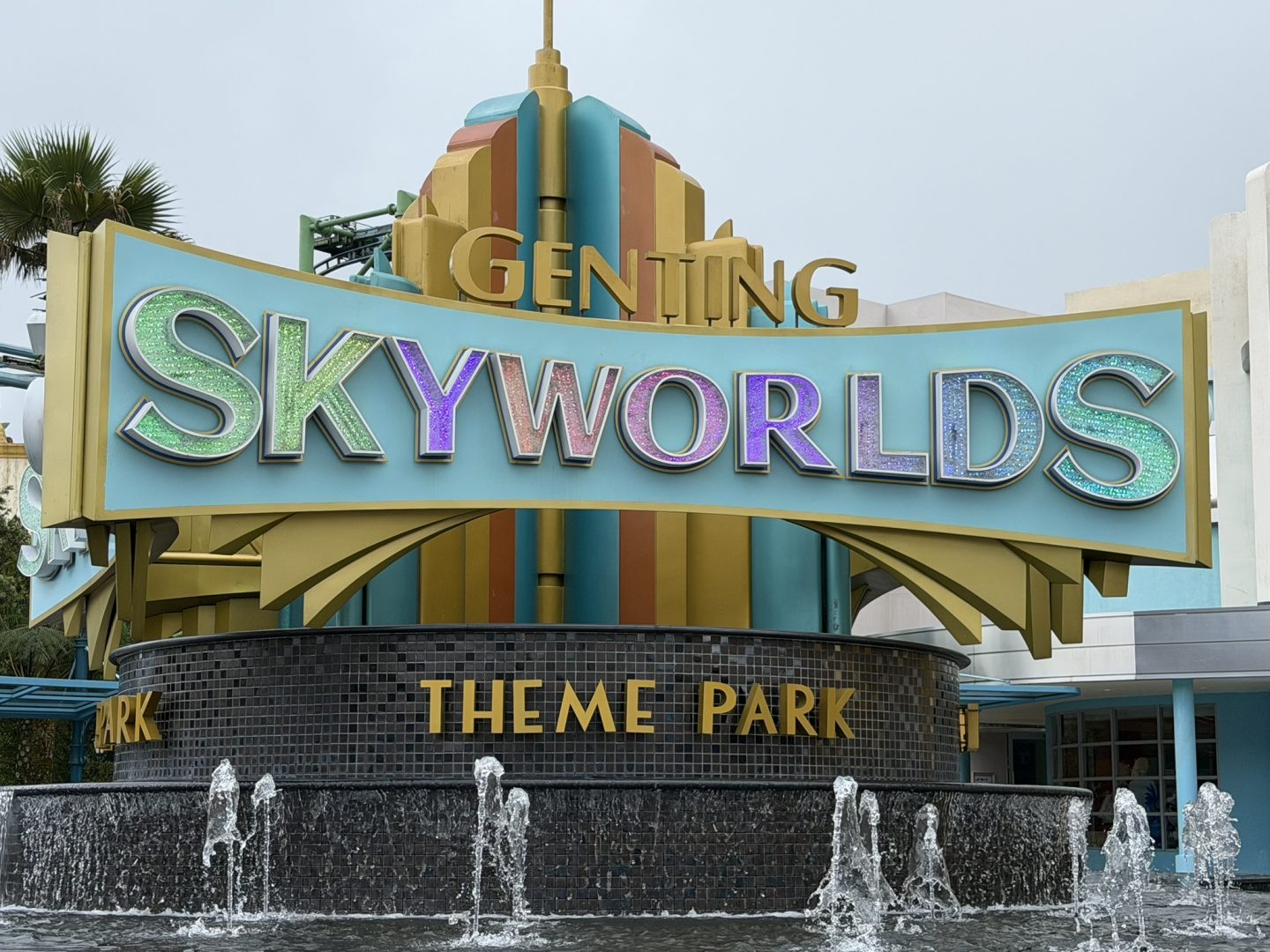
The theme park is one of the main draws. It was originally planned as a 20th Century Fox World park, which led to a long dispute and delays, before eventually opening as Genting SkyWorlds. The park is now split into different themed zones with a mix of rides and attractions.
It’s more of a resort-style destination, but a good option if you want something different from the city and a break from the heat.
Batu Caves
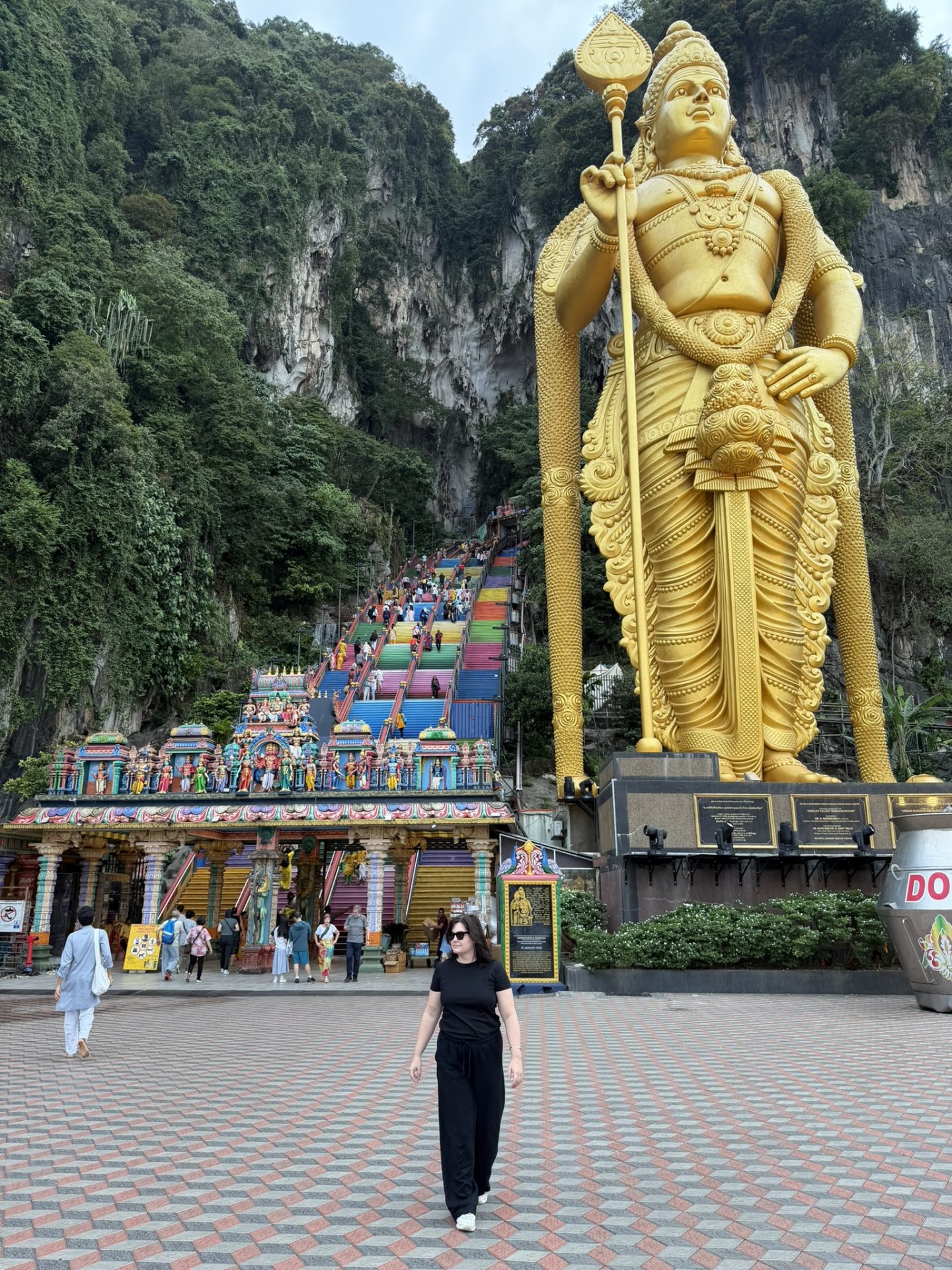
Batu Caves is one of the most popular day trips from Kuala Lumpur. The site is known for its large golden statue and the 272 colourful steps leading up into the caves. It’s free to visit, but worth going early to avoid the heat and crowds. There are also monkeys around, and it’s an active place of worship, so dress accordingly. It’s an easy trip from the city and one of the more recognisable sights in Malaysia.
Putrajaya
Putrajaya is known for its modern architecture and large government buildings, but most people visit for the pink Putra Mosque, which sits right on the water. It’s a quieter contrast to Kuala Lumpur, with wide open spaces and a more planned feel to the city. It’s easy to combine a few stops here in a half-day trip.
Fireflies and Blue Tears Tour (Kuala Selangor)
Kuala Selangor is home to one of the largest firefly colonies in the world, thanks to the mangrove trees along the riverbanks.
We joined a tour here to see both the fireflies and the ‘blue tears’, a natural bioluminescent algae found in the Selangor River. It’s a couple of hours from Kuala Lumpur, but one of the more unique experiences you can do from the city, especially in the evening.
Frequently Asked Questions
These are some of the most common questions we had before visiting Kuala Lumpur.
Is Kuala Lumpur worth visiting?
Yes, particularly as a starting point for a trip around Malaysia. It offers a mix of culture, food and modern city life, all within a relatively compact area.
How many days do you need in Kuala Lumpur?
2 to 3 days is enough to see the main highlights, including the Petronas Towers, Batu Caves and Chinatown.
Where is the best area to stay in Kuala Lumpur?
Bukit Bintang and KLCC are the most convenient areas for a first visit, with easy access to transport, food and attractions.
What is Kuala Lumpur known for?
Kuala Lumpur is best known for the Petronas Towers, its diverse food scene and its mix of modern and cultural landmarks.
What is the best time to visit Kuala Lumpur?
Kuala Lumpur is hot and humid year round, with frequent short bursts of rain. Travel is possible at any time, although mornings are often the most comfortable for exploring.

