Singapore is clean, efficient, safe, and compact, which means you can experience a huge amount in less than a week without feeling overwhelmed. In this six day Singapore itinerary for first timers, I share exactly how we spent our trip, combining iconic sights such as Marina Bay Sands and Gardens by the Bay with hawker food, neighbourhoods like Chinatown and Kampong Glam, and a full day on Sentosa Island at Universal Studios.
- Everything You Need to Know Before Visiting Singapore
- ♪ You can catch our daily Singapore vlogs on TikTok
I appreciate your patience with the ads, they help cover the costs of maintaining the blog.
Food & Hawker Culture
♪ Check out our Hawker centre vlog
Food in Singapore genuinely deserves its own section because the food scene here is on another level. It was the first country where individual hawker stalls earned Michelin stars, with Hawker Chan becoming internationally known as one of the first street food vendors in the world to receive a Michelin star.
A hawker in Singapore is conceptually street food, but the system is far more structured than that description suggests. In the 1960s and 1970s, the government moved vendors off the streets into regulated, licensed, purpose built hawker centres. This created clean, organised food complexes where multiple independent stalls operate under strict hygiene standards while keeping prices affordable.
Today, Singapore’s hawker culture is officially recognised by UNESCO as intangible cultural heritage, cementing its importance not just as food, but as a core part of national identity. With Michelin stars awarded to individual stalls, hawker centres are not just somewhere to eat, they are a must visit experience and one of the best ways to understand Singapore’s multicultural roots through its cuisine.
When visiting a hawker centre for the first time, it helps to know that most stalls specialise in only one or two dishes and some of the most popular options can sell out by the evening. Queues are normal and often move quickly. It is common to walk around first to see what looks good before choosing where to order. Most centres also operate on a self service system where you collect your food and return trays to the designated stations once you have finished eating.
Fun fact: Singapore has a remarkable number of Michelin recognised eateries across the city, ranging from humble hawker stalls to high end restaurants. It highlights just how seriously food is taken in Singapore and why the dining scene is such an important part of visiting the country.
Marina Bay
Helix Bridge
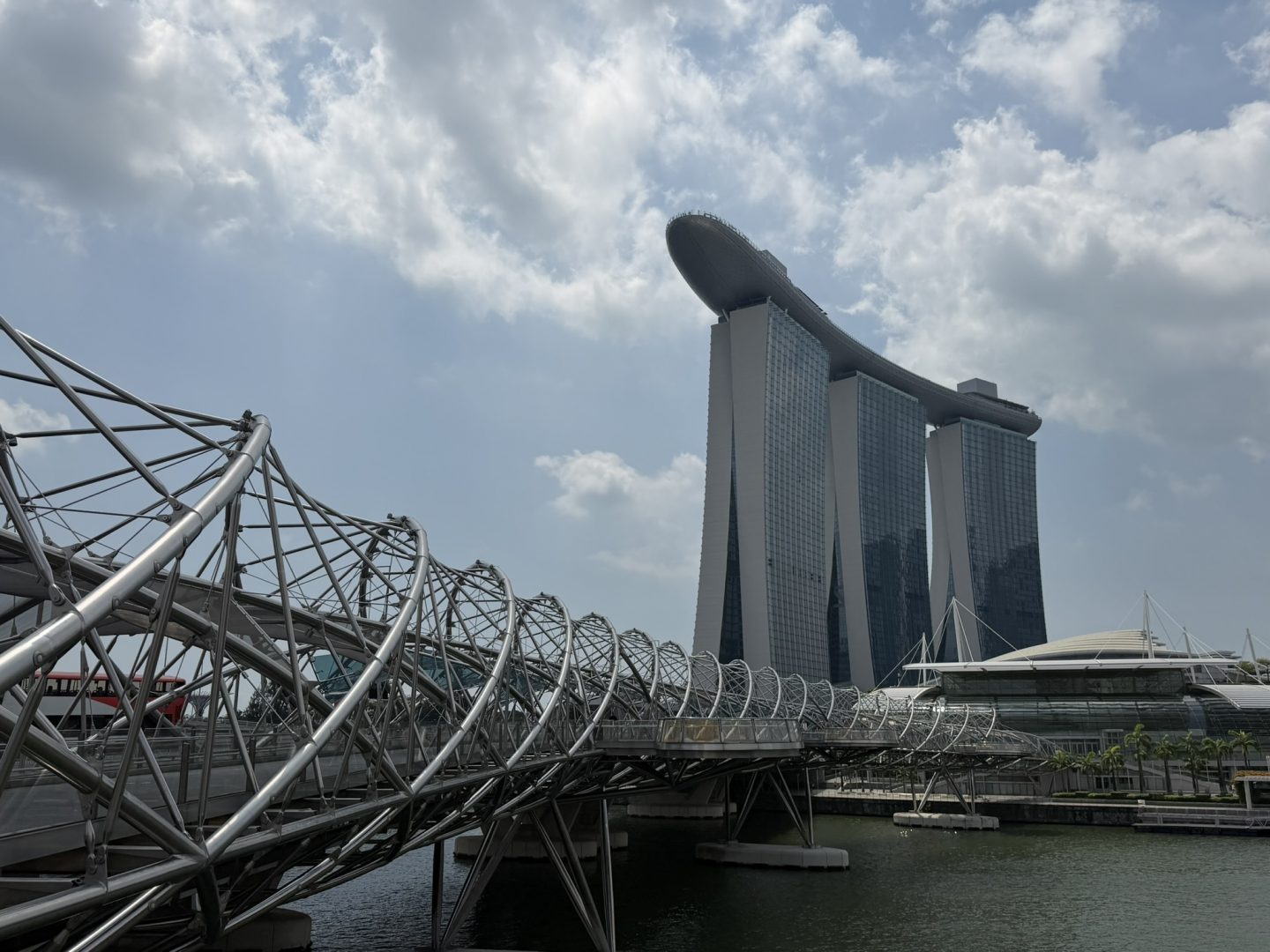
Helix Bridge is a pedestrian bridge that connects Marina Centre to Marina South across Marina Bay. It is designed to resemble the structure of DNA, which is where the name comes from. The double helix structure is particularly striking after dark, when it is illuminated with coloured LED lighting. At night, it becomes one of the best free viewpoints in the Marina Bay area, offering fantastic skyline views without needing a ticket.
Marina Bay Sands
Marina Bay Sands is one of the most iconic sights on the Singapore skyline, with its three tower hotel topped by a boat shaped structure. It is far more than just a hotel. The complex includes a luxury shopping mall, casino, high end restaurants, a museum, and the famous rooftop infinity pool that overlooks the city. If you are not staying at the hotel, you can still visit the SkyPark Observation Deck. This is a ticketed attraction located 56 storeys high, offering panoramic views across Marina Bay, including Gardens by the Bay and the wider city skyline.
We booked the observation deck tickets online in advance, and I would strongly recommend doing the same. While you can buy tickets on the day, sunset slots tend to sell out quickly. There is no time limit once you are up there, so we arrived just before sunset at 18:45 and stayed long enough to see the city in full daylight and then completely illuminated at night. Afterwards, we walked straight over to Gardens by the Bay.
Gardens by the Bay
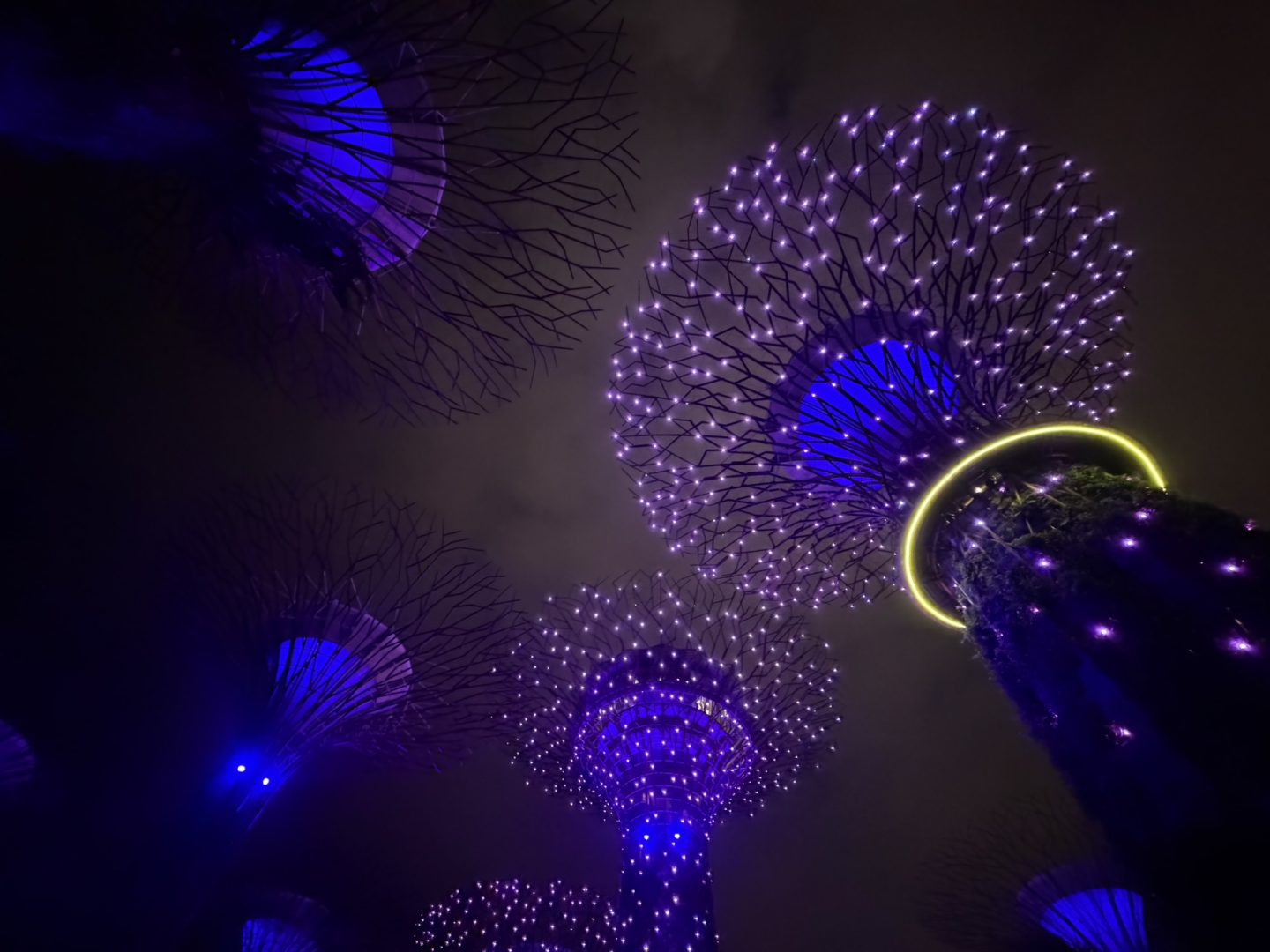
Gardens by the Bay is home to the iconic Supertrees that have become Singapore’s postcard skyline view. While they are visually striking, they are not just aesthetic structures. Some of the Supertrees are fitted with solar panels that help power the nightly light displays, and they also function as environmental engines, supporting cooling and air circulation systems for the nearby conservatories, including the Cloud Forest and Flower Dome.
The outdoor gardens and Supertree Grove area are completely free to visit, making this one of the best free attractions in Singapore. You only need tickets if you plan to access the OCBC Skyway walkway or enter the Flower Dome and Cloud Forest conservatories. Platforms such as Klook often offer reasonably priced bundle packages if you intend to visit multiple areas.
The Supertrees look impressive at any time of day, but I would recommend seeing them more than once. During daylight you can appreciate the scale and design, while at night the illuminated structures feel far more dramatic against the Marina Bay skyline.
OCBC Skyway and Supertree Observatory
The OCBC Skyway lets you walk between the Supertrees around 22 metres above ground, offering some of the best views across Marina Bay. We chose this over the Supertree Observatory because we wanted to be closer to the trees themselves rather than viewing them from above. I personally felt this was a worthwhile experience as it gives you a completely different perspective of the structures and the skyline beyond. We purchased tickets online in advance, although they were also available to buy on the day next to the entrance. There are lifts that take you up and back down, which is very welcome after a long day of walking.
Flower Dome
The Flower Dome is one of the world’s largest glass greenhouses, recreating a Mediterranean climate with plants from five continents. If you are visiting both conservatories, I would start with Flower Dome because the exit is conveniently located near the entrance to the Cloud Forest. That said, if time is limited, this is the one we felt we could have skipped. It is beautifully maintained, but unless you have a strong interest in horticulture, it may not be the highlight of your visit.
Cloud Forest
The Cloud Forest recreates a misty mountain environment and features one of the world’s tallest indoor waterfalls. It showcases plant species that grow at elevations of up to 3,000 metres, which most visitors would never normally encounter. The waterfall inside is genuinely impressive and noticeably cooler than the humidity outside, which is a welcome relief after spending time walking around Marina Bay. For us, this was the standout conservatory.
The waterfall also has scheduled misting periods that take place at set times throughout the day. If you happen to arrive during one of these moments the atmosphere inside becomes even more dramatic as the mist fills the space around the vegetation and walkways.
Satay by the Bay
If you have worked up an appetite, Satay by the Bay offers tasty and affordable local dishes without leaving the park. We shared a satay combo set with six chicken, six beef, two prawn, and two pork belly skewers plus rice for 19 SGD between two of us. We also added two watermelon juices at 7 SGD each. The satay and pork belly were definite highlights.
Garden Rhapsody Show
The free Garden Rhapsody shows run daily at 19:45 and 20:45. It is a ten minute light and music show set against the Supertrees and is completely free to attend. It was an incredible experience and one of the highlights of our time in Singapore. It does get fairly busy if you want a prime viewing spot, so arriving a little earlier is worthwhile.
Marina Bay Street Circuit – F1 Pit Building
The F1 Pit Building sits along the Marina Bay waterfront and forms part of the Marina Bay Street Circuit, home to the Singapore Grand Prix. Each year, this area transforms into the paddock and pit lane for the Formula One night race, with grandstands and track infrastructure built around the city streets.
Outside of race season, the area is surprisingly calm and open. You can walk along the promenade near the pit building and see sections of the track layout marked on the roads. If you are visiting when the race infrastructure is being assembled or dismantled, you may notice road closures and temporary seating going up around Marina Bay. Even if you are not visiting during the Grand Prix, it is a cool stop for Formula One fans, especially with the Singapore skyline as a backdrop. The location also connects easily to Merlion Park, the Helix Bridge, and Marina Bay Sands, so it works well as part of a wider Marina Bay walking route.
Merlion Park
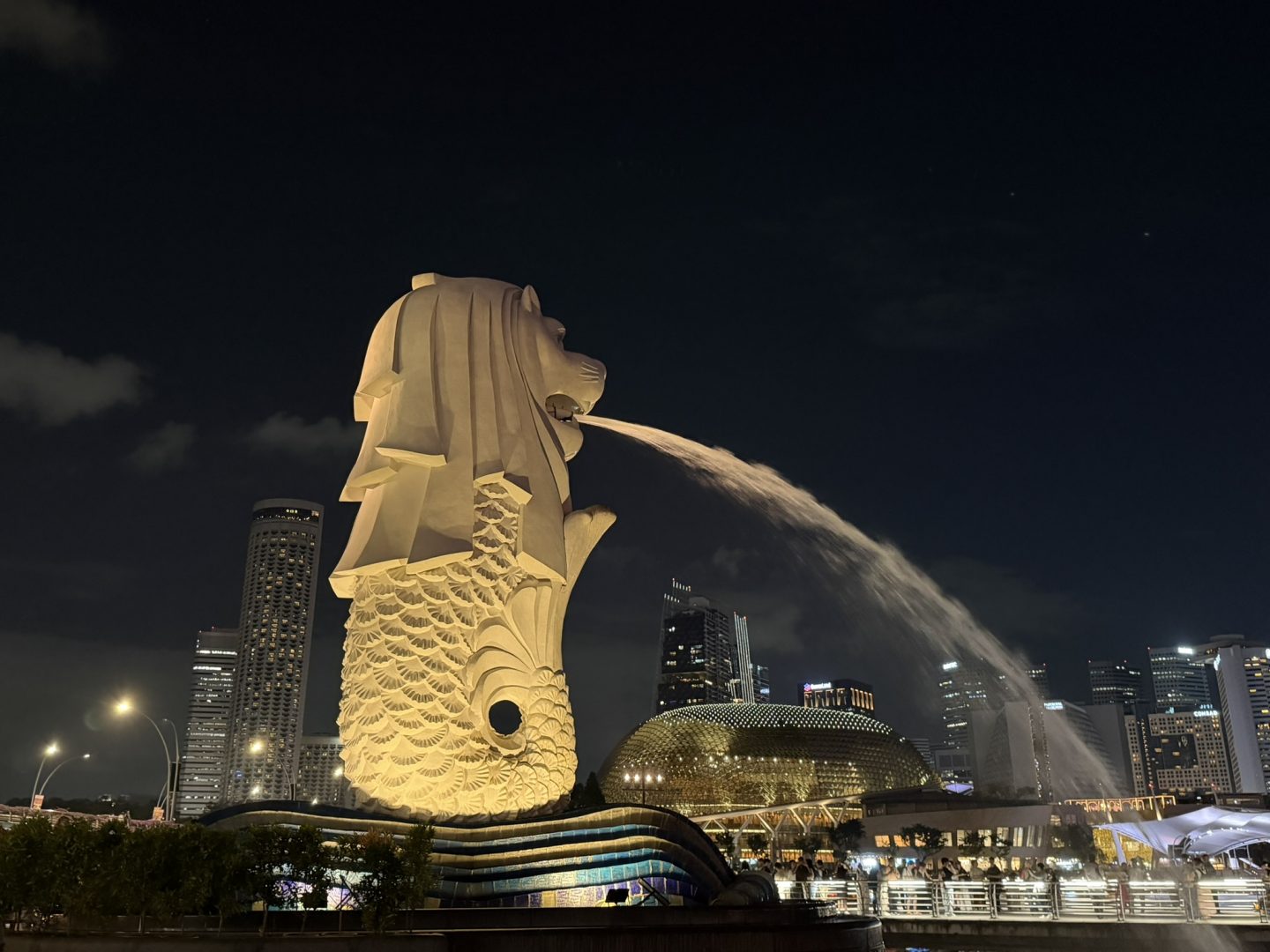
Merlion Park is one of the most iconic and recognisable landmarks in Singapore. The Merlion statue, with the head of a lion and the body of a fish, represents Singapore’s origins as a fishing village and its name, which comes from the Malay word Singapura meaning Lion City. Positioned directly on the Marina Bay waterfront, it offers some of the best unobstructed skyline views in the city.
It is completely free to visit and is within walking distance of Marina Bay Sands, the Esplanade, and the Helix Bridge, making it an easy stop when exploring the area. It does get busy, especially in the late afternoon, but the open promenade means it never feels too cramped.
In the evening, the area becomes even more atmospheric. From Merlion Park you can watch the Marina Bay Sands light and water show across the bay, where lasers, music, and illuminated fountains reflect off the skyline. Timing your visit around sunset allows you to see the city in daylight, golden hour, and fully lit at night, all from one spot.
Chinatown
Chinatown in Singapore blends heritage, temples, street markets, and some of the city’s most celebrated hawker food into one compact and walkable district. It is one of the best areas to explore on foot, especially in the late afternoon when the streets start to feel lively but not overwhelming.
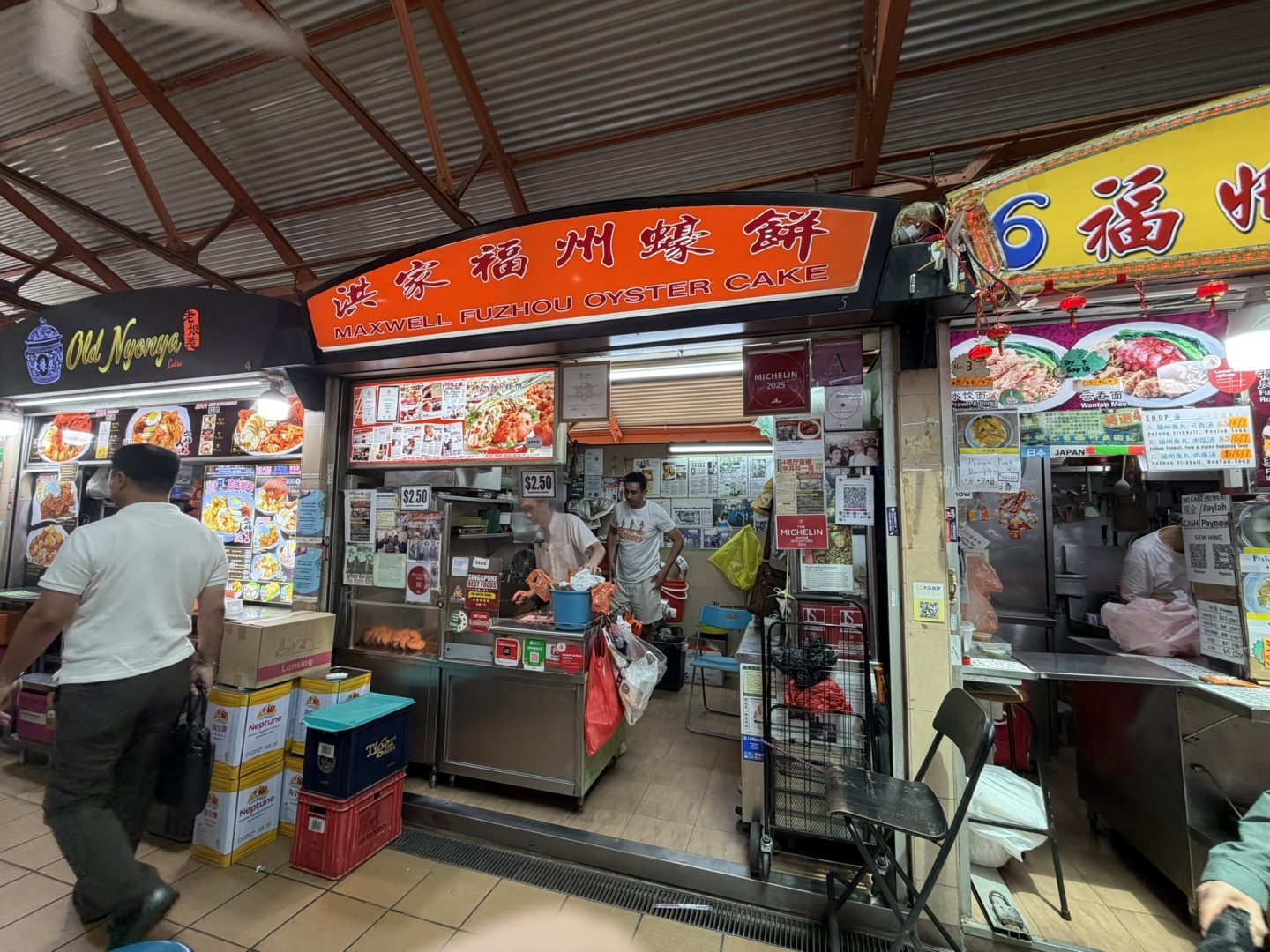
Chinatown Complex is widely regarded as the most Michelin recognised hawker centre in the city, with a mix of Michelin starred, Bib Gourmand, and Michelin Guide listed stalls all under one roof. It was home to Hawker Chan, which became internationally known as one of the first street food vendors in the world to receive a Michelin star. The complex itself is large and slightly chaotic in the best possible way, offering everything from roast meats to handmade dumplings at very affordable prices.
Just a short walk away is Maxwell Food Centre, which feels smaller and a little easier to navigate. It is best known for Tian Tian Hainanese Chicken Rice, one of the most famous chicken rice stalls in Singapore. The atmosphere here feels local and unpolished in an authentic way, with shared tables and consistently high quality food at reasonable prices.
Beyond the food scene, Chinatown has several cultural highlights worth visiting. The Buddha Tooth Relic Temple stands out with its ornate red facade and richly decorated interior, while Sri Mariamman Temple is the oldest Hindu temple in Singapore and reflects the country’s multicultural identity within just a few streets.
Between the hawker centres, historic temples, preserved shophouses, and street markets, Chinatown offers one of the most well rounded snapshots of Singapore in a single neighbourhood.
Sentosa Island
Sentosa Island is Singapore’s dedicated resort island, packed with beaches, attractions, theme parks, and restaurants. It feels separate from the city skyline despite being only minutes away. If you arrive by taxi or Grab, an island entry toll is automatically added to the fare. The amount varies depending on the time of day and entry point, so the final price may be slightly higher than the original estimate shown in the app.
Cable Car
The Singapore Cable Car is one of the most scenic ways to reach Sentosa. The Mount Faber Line connects mainland Singapore to Sentosa, offering panoramic views over the harbour, cruise terminals, and city skyline. The cabins are fully enclosed and air conditioned, making it a comfortable ride even in the heat. Tickets can be purchased online in advance or at the station, and combination passes are often available if you plan to use both cable car lines on the island. It is not the cheapest transport option, but it doubles as a sightseeing experience.
Skyline Luge
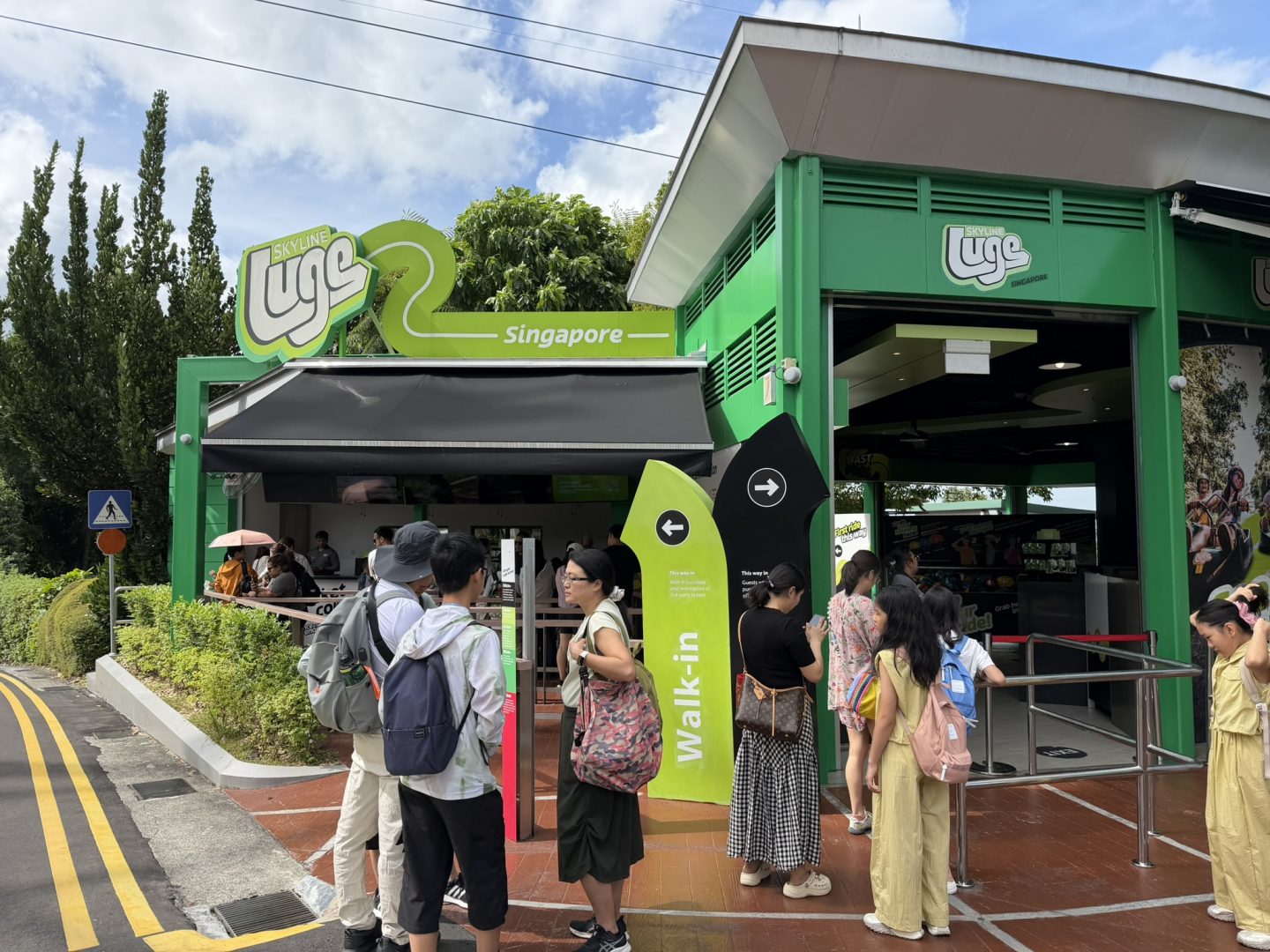
Skyline Luge is a gravity powered go kart style ride where you control your own speed as you descend one of several tracks. If you book through platforms like Klook, you will need to redeem your ticket at the counter. Expect the first ride of the day to have the longest wait, around twenty minutes at peak times, with queues easing for subsequent runs. Small bags can be taken on the luge and placed between your legs, though lockers are available if preferred. It is fast paced, genuinely fun, and suitable for both adults and older children.
♪ Watch our Skyline Luge TikTok vlog
OCEAN Restaurant
We visited for lunch whilst on Sentosa Island and not only was it an incredible experience, but it was not as expensive as I expected. The main dining room offers a panoramic viewing panel into the S.E.A. Aquarium, where you get an up close look at manta rays, reef sharks, and tropical fish while you dine. The lunch set menu offers two or three courses, or you can order from the à la carte menu. We chose the two course option, which included bread and a soft drink. We had burrata to start and fish and chips for main, plus a glass of wine each. Including service charge and taxes, it came to around £52 per person. Without the extra drinks it would have been close to the price of an adult aquarium ticket, so it felt worth it for such a unique experience.
♪ Watch our OCEAN restaurant TikTok vlog
Universal Studios Singapore
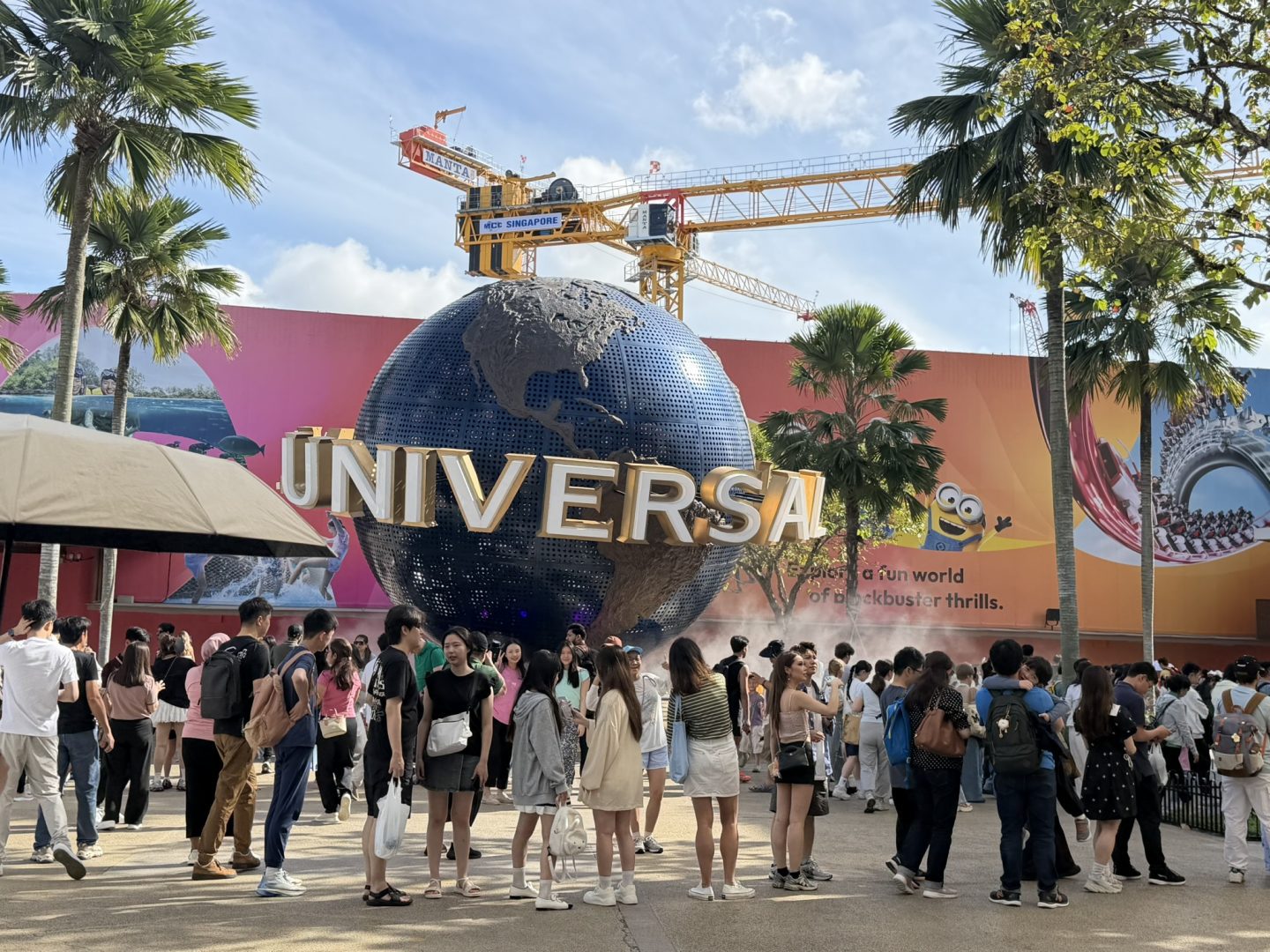
Universal Studios Singapore is one of the smaller Universal parks globally, and significantly smaller than Orlando or Japan. Smaller does not mean underwhelming though, the park includes themed zones such as Sci Fi City, Ancient Egypt, The Lost World, Far Far Away, New York, Hollywood, and Minion Land. Standout attractions include Battlestar Galactica, Transformers The Ride, and Revenge of the Mummy. Jurassic Rapids Adventure was closed during our visit, so I recommend downloading the official app for live queue times and ride closures on the day.
Even though the park is smaller than other Universal locations, queues can still become quite long later in the day. During our visit we saw wait times reaching up to seventy minutes for some rides, so the Express Pass allowed us to move through the park far more efficiently and experience everything in one day.
♪ Here’s everything we ate at Universal Studios (Tik Tok)
Kampong Glam
Kampong Glam is one of Singapore’s most characterful neighbourhoods, known for its strong Malay and Arab heritage, colourful shophouses, and independent boutiques. It feels noticeably different from Marina Bay and the financial district, with a more laid back, creative atmosphere.
Haji Lane is the most photographed street in the area. It is narrow, vibrant, and lined with murals, small fashion boutiques, cafes, and bars. During the day it is great for browsing and coffee stops, while in the evening it becomes livelier with music and outdoor seating.
At the heart of Kampong Glam is Sultan Mosque, easily recognisable by its large golden dome. It is one of Singapore’s most important religious landmarks and a symbol of the country’s Muslim community. Visitors are welcome outside prayer times, and modest dress is required. Just around the mosque, Arab Street is known for its textile shops and perfume stores, reflecting the district’s trading history.
Between the heritage buildings, independent shops, and strong cultural identity, Kampong Glam offers a completely different side of Singapore within a compact and walkable area.
Katong and Joo Chiat
Katong and Joo Chiat are known for their strong ties to Peranakan heritage and are among the most visually distinctive neighbourhoods in Singapore. Located in the east of the city, this area feels more residential and local compared to Marina Bay, but it offers some of the most photographed streets in the country.
Peranakan Culture
Peranakan culture in Singapore refers to the descendants of early Chinese traders who settled in Southeast Asia and married into local Malay communities. Over generations, this community developed its own identity, combining Chinese traditions with Malay language, dress, architecture, and food.
Today, Peranakan culture is most recognisable through the colourful, intricately detailed shophouses found in neighbourhoods like Katong and Joo Chiat, as well as a distinctive cuisine that blends Chinese cooking techniques with Malay ingredients and spices. The term Nyonya is often used to describe Peranakan cuisine, which includes rich curries, laksa, and kueh desserts.
Koon Seng Road
Koon Seng Road is one of the most famous streets in the area, lined with pastel coloured Peranakan shophouses featuring ornate tiles, wooden shutters, and decorative facades. It is a popular photo spot and a great place to appreciate the architectural details up close. Beyond the aesthetics, the wider Katong and Joo Chiat area is known for traditional Peranakan food and long standing local eateries. You will find heritage bakeries, laksa shops, kopi stalls, and modern interpretations of Nyonya cuisine, making it an ideal stop for both culture and food in one visit.
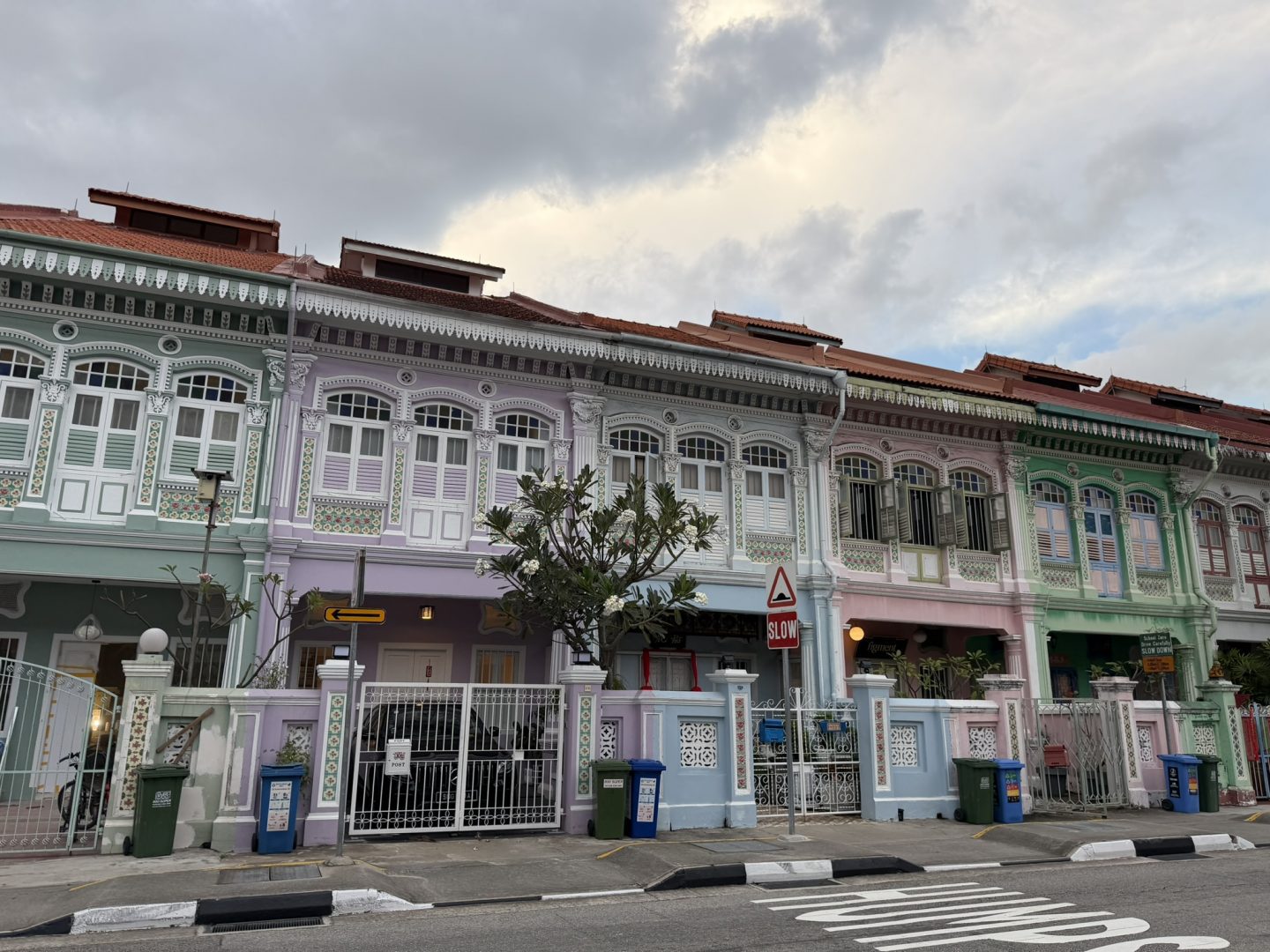
Peranakan Houses, Koon Seng Road
Civil District
The Civic District is one of the most historically significant areas in Singapore, known for its grand colonial architecture and cultural institutions. Located between Marina Bay and Orchard Road, this area showcases a different side of the city compared to the ultra modern skyline.
Just across the Padang is the National Gallery Singapore, housed in the former Supreme Court and City Hall buildings. It is one of the largest museums in Southeast Asia and blends heritage architecture with modern gallery spaces. Nearby, Victoria Theatre and Concert Hall stands along the Singapore River and is one of the city’s most recognisable historic buildings.
The Civic District feels more refined and spacious than other parts of the city, with wide lawns, stately buildings, and a strong sense of Singapore’s colonial past. It pairs well with a walk towards Marina Bay, allowing you to see how the city transitions from historic foundations to futuristic skyline within just a few streets.
Long Bar at Raffles Singapore
One of the most famous landmarks in the Civic District is Raffles Singapore, home to the iconic Long Bar and the birthplace of the Singapore Sling. Even if you are not staying at the hotel, it is worth stepping inside to see the preserved colonial interiors, whitewashed facades, and peaceful courtyards that reflect Singapore’s colonial era.
Back in the early 20th century, it was considered socially improper for women to drink alcohol in public in Singapore. Teas and fruit juices were viewed as more appropriate. That changed in 1915, when a Hainanese bartender at Raffles Hotel created a cocktail that looked like fruit juice but discreetly contained gin and liqueurs. The result was the Singapore Sling, which can still be enjoyed today at the Long Bar where it was first created more than a century ago.
The Long Bar retains a relaxed and slightly theatrical atmosphere. Guests are still encouraged to toss peanut shells straight onto the floor, a tradition that sets it apart from Singapore’s otherwise immaculate standards and adds to the charm of the experience.
View this post on Instagram
Changi Airport, Jewel
Changi Airport is often ranked as one of the best airports in the world, and it genuinely feels more like a lifestyle destination than a transit hub. Beyond the terminals themselves, the standout attraction is Jewel Changi Airport, a multi level retail and entertainment complex connected to the airport.
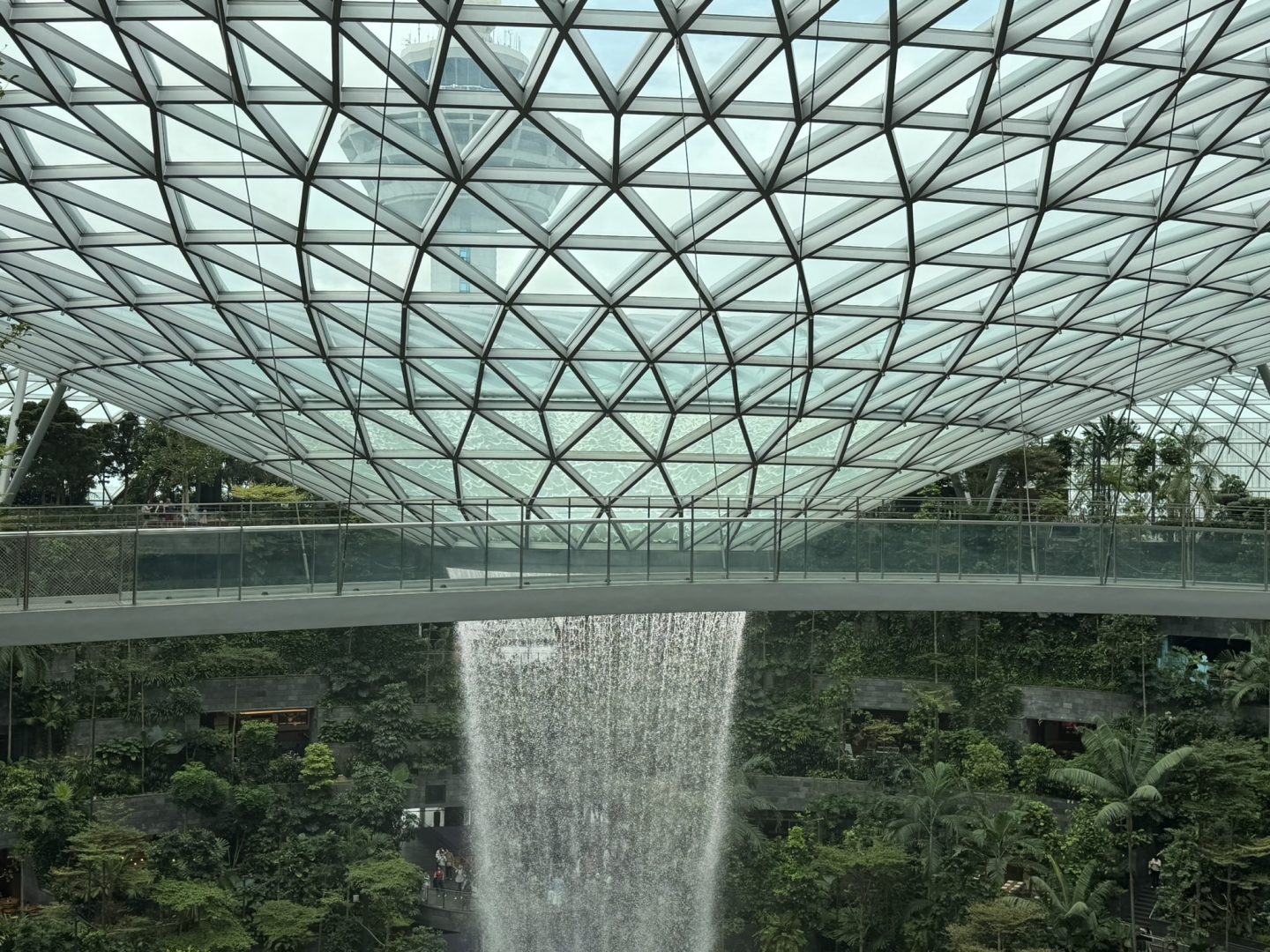
At the centre of Jewel is the HSBC Rain Vortex, the world’s tallest indoor waterfall, cascading down through a lush indoor forest known as the Shiseido Forest Valley. It is free to visit and accessible to both travellers and non travellers, making it a destination in its own right even if you are not flying.
Jewel also houses restaurants, cafes, shops, a cinema, and attractions such as the Canopy Park at the top level. Whether you are arriving, departing, or simply have a long layover, it is worth allowing extra time to explore. Even the main terminals at Changi offer gardens, art installations, and rest areas, which makes the entire airport experience feel calm and thoughtfully designed rather than rushed or purely functional.
If you have time before your flight it is also easy to move between terminals using the free shuttle buses that connect the airport. This makes it possible to explore different areas of Changi even during a layover.
Singapore Souvenirs
Irvins
IRVINS started in Singapore and built its reputation on elevating salted egg, a flavour deeply rooted in local hawker cuisine. Salted egg yolk has long been used in Chinese and Singaporean dishes, from seafood to buns. IRVINS modernised this traditional flavour into packaged snacks, turning a familiar local taste into an internationally recognised Singapore brand. It’s famous for its salted egg snacks, especially salted egg potato chips and fish skin, you can find it in shopping malls and at Changi Airport.
Kele Pineapple Tarts
Pineapple tarts have Peranakan and Chinese heritage and are closely associated with festive celebrations in Singapore, especially Lunar New Year. The name sounds like prosperity in certain Chinese dialects, which is why they symbolise wealth and good fortune. Kele positions itself as a premium Singapore bakery brand, preserving this traditional recipe while refining it with modern presentation. They are especially popular during Lunar New Year but are available all year round. They make a great gift and travel well.
Kaya Jam
Kaya jam is deeply embedded in Singapore’s kopitiam culture. Made from coconut milk, eggs, sugar, and pandan, it reflects the multicultural culinary roots of the region, blending Malay and Chinese influences. Kaya toast with butter is a classic local breakfast that has been served for generations. It is typically spread on toast with butter for a classic Singapore breakfast. Jars are widely available in supermarkets and make an easy souvenir to bring home.
TWG Teas
TWG Tea is a homegrown Singapore luxury tea brand that draws inspiration from Singapore’s historical role as a major trading port. The country has long been a crossroads for global trade routes, including tea from China, India, and Sri Lanka. TWG positions itself within that legacy, combining international tea sourcing with branding and retail experiences that reflect Singapore’s identity as a modern global hub. It’s known for its beautifully packaged tea tins and gift sets, and offers a wide range of blends and single origin teas, making it a more premium souvenir option.
Everything You Need to Know Before Visiting Singapore

