Ipoh sits in the state of Perak, around two hours north of Kuala Lumpur, and is known for its limestone hills, cave temples and strong food culture. It is often added as a stop between Kuala Lumpur and Penang, but whether it is actually worth visiting or just a convenient stop depends on how much time you have.
Once one of the richest cities in the country due to its tin mining industry, much of that history is still visible today in its colonial architecture and old town streets. If you’re planning a wider trip, this Malaysia travel guide explains how Ipoh fits into a broader route across the country.
I appreciate your patience with the ads, they help cover the costs of maintaining the blog.
How to get to Ipoh
We took a 10:00 coach with Unititi Express from Cameron Highlands and arrived just after midday, making it a relatively quick and easy journey. From the bus station, it was around a 20 minute Grab to MU Hotel, which is where we stayed. One thing to be aware of is that if you book your bus online and do not have a QR code, you will need to exchange your ticket for a boarding pass at the station and pay an additional 2 ringgit per ticket. It is a small detail, but worth allowing extra time for so you are not rushing.
It can also be reached easily from Kuala Lumpur and fits naturally into your route, especially between Kuala Lumpur and Penang.
Where to stay in Ipoh
We stayed at MU Hotel, which worked well as a base and was a short Grab ride from most places we wanted to visit. Ipoh itself is quite compact, so where you stay is less critical than in larger cities, but being within easy reach of Old Town makes things simpler.
What to eat and drink in Ipoh
Food is one of the main reasons to visit Ipoh, and much of the experience revolves around trying local dishes rather than following a list of attractions. It makes sense to start here, as eating and moving between cafés and restaurants is a large part of how you spend your time in the city.
Ipoh’s food culture is closely tied to its history. During the tin mining boom in the late nineteenth and early twentieth century, migrant communities set up traditional kopitiams and small food businesses to serve workers affordable meals. That has carried through to today, with a strong local food scene that still feels accessible and reasonably priced. It is easy to try multiple places in one day without needing to plan too much in advance.
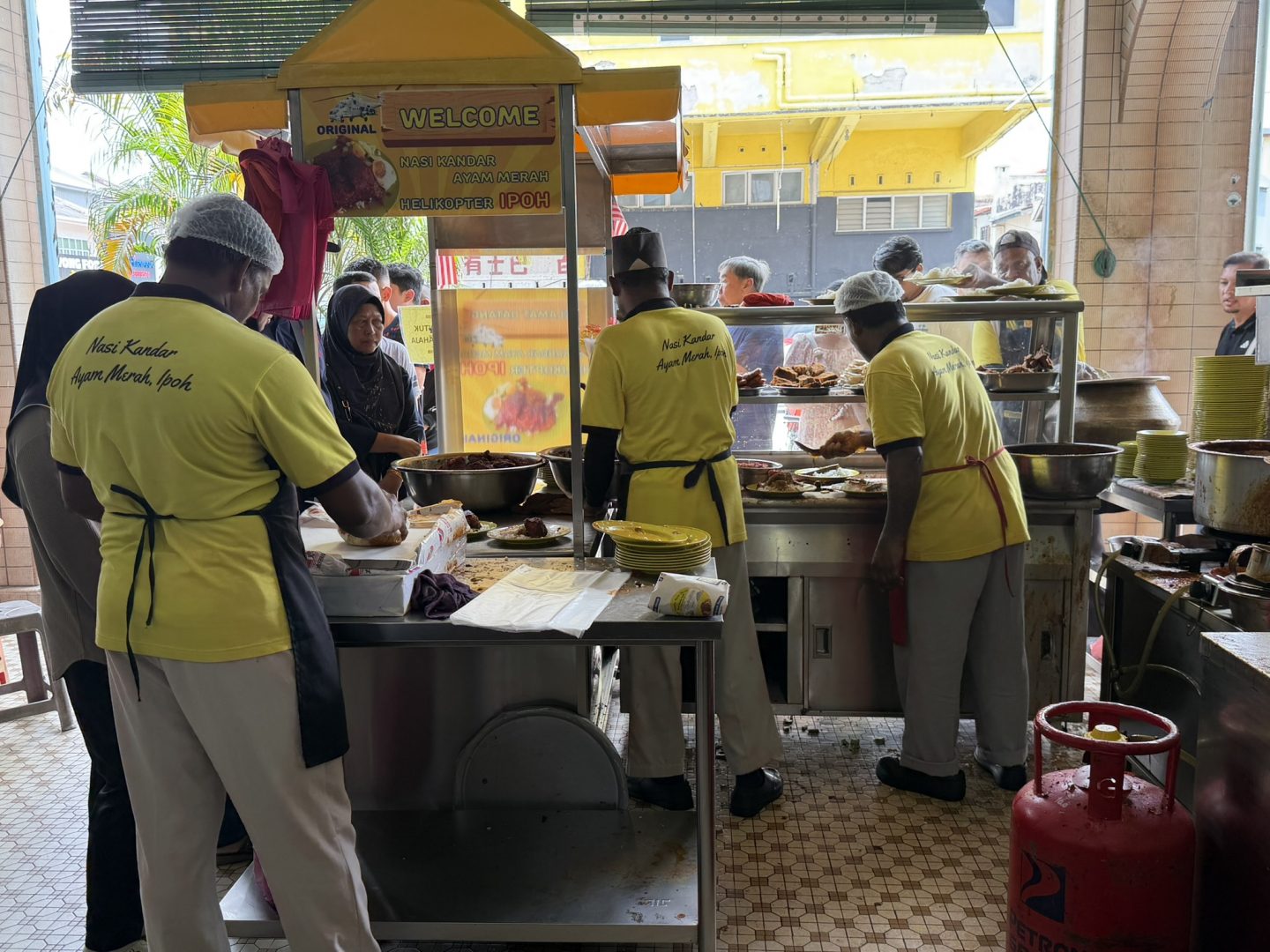
Nasi Kandar Ayam Merah (Nasi Ganja)
Often nicknamed Nasi Ganja due to how addictive it is said to be, Nasi Kandar Ayam Merah is one of the most well known food spots in Ipoh and has been serving locals for decades.
Nasi kandar is steamed rice served with chicken or beef, topped with a mix of curry sauces, salted egg and sambal. Priced at less than £2, it’s simple, filling and very flavourful. It’s traditionally eaten with your hands, although you can ask for cutlery without any judgement. The dishes have a bit of a kick to them, so ordering some poppadoms helps to balance it out.
There are two queues, one for takeaway and one for dine in, and the dine in queue was noticeably shorter when we visited. We ended up sharing a table with a local from Ipoh who was back visiting from Kuala Lumpur, and with the queue constantly out the door it was clear this was a true local hot spot.
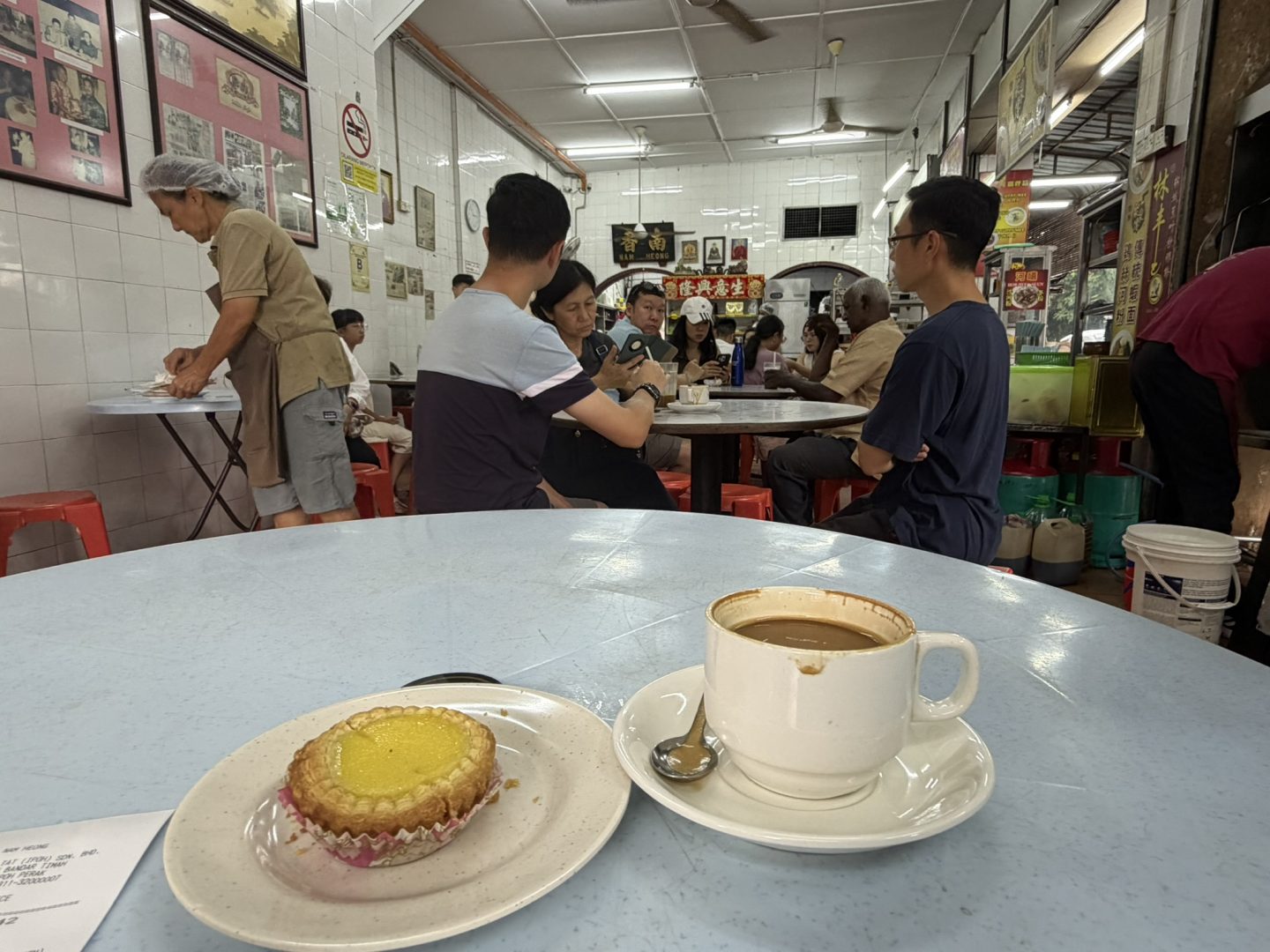
Ipoh white coffee and egg tarts
White coffee originated from Ipoh, dating back to the tin mining era when Hainanese immigrants adapted traditional coffee roasting methods. Instead of roasting the beans with sugar or margarine like darker local coffees, they used a lighter roasting process, which gave the coffee its smoother, less bitter taste. It’s then typically served with condensed milk, which is what gives it the creamy flavour.
Both Nam Heong and Sin Yoon Loong, which sit opposite one another, are considered the birthplaces of white coffee, with Nam Heong linked to the inspiration behind Old Town White Coffee, now widely sold in supermarkets across Malaysia. We stopped by Nam Heong for a white coffee, both hot and iced, along with a side of egg tarts.
Egg tarts are another staple you will see across Ipoh’s kopitiams, influenced by Chinese and colonial baking traditions. They became popular as part of the café culture that developed alongside the tin mining industry, where simple, affordable pastries were served alongside coffee. Today, they are one of the most recognisable snacks to have with a white coffee, and easy to find across the city.
If you want to compare old and new, Old Town White Coffee also has several locations across Ipoh where you can try it in house. The branch near Concubine Lane has a small heritage gallery and shop, but the selection was surprisingly limited, especially compared to what you see in supermarkets.
Chinese Bakeries
Likewise, Chinese bakeries produced pastries like heong peng as affordable, durable snacks, which is why they remain closely associated with Ipoh today.
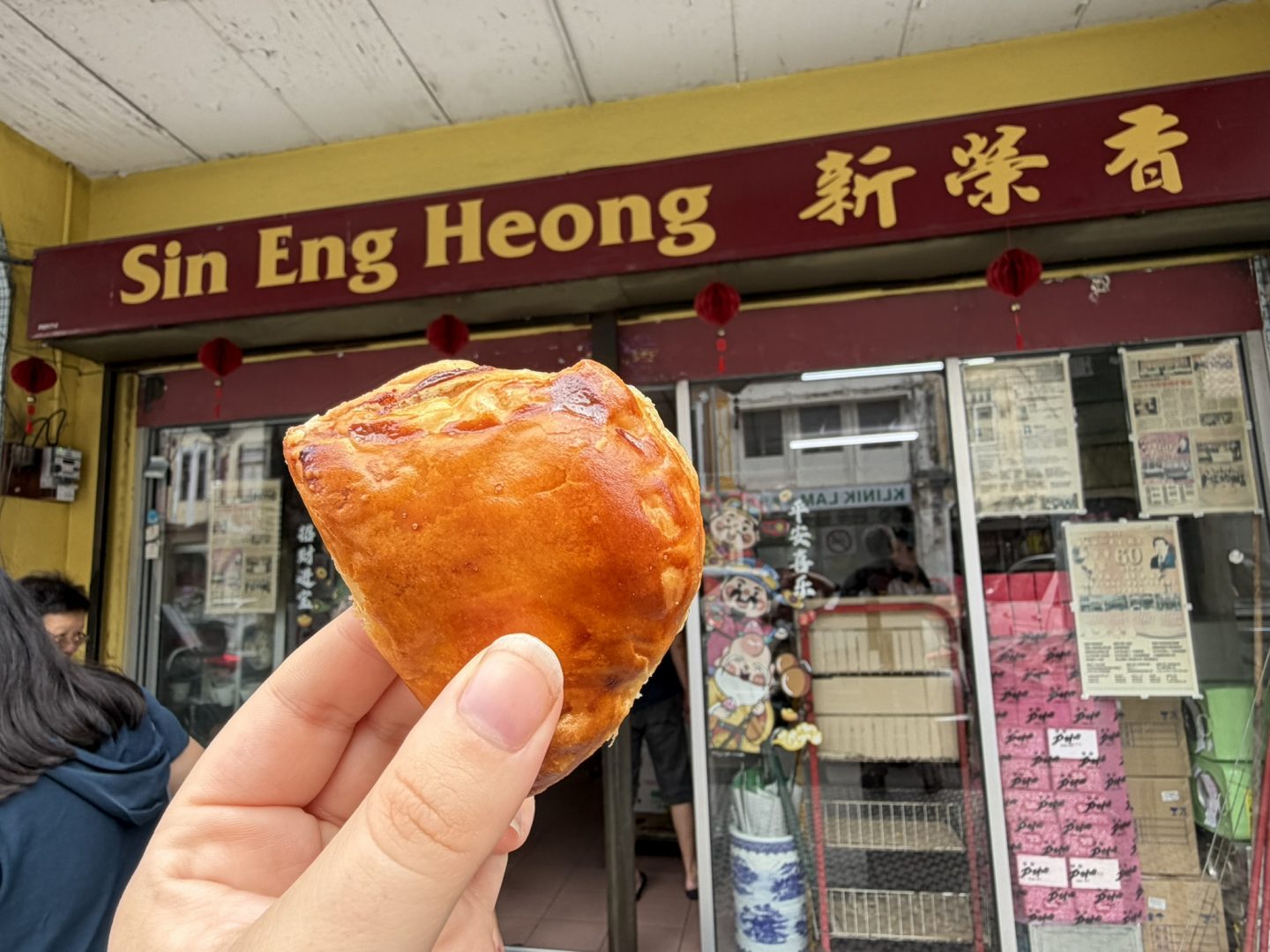
Kaya puffs from Sing Eng Hoeng
Established in 1958, Sing Eng Hoeng is best known for its kaya puffs. These are small, flaky pastries filled with kaya, a coconut and egg jam that is widely used across Malaysia. The bakery is known for producing them fresh in batches throughout the day, which is why they are often still warm when you buy them.
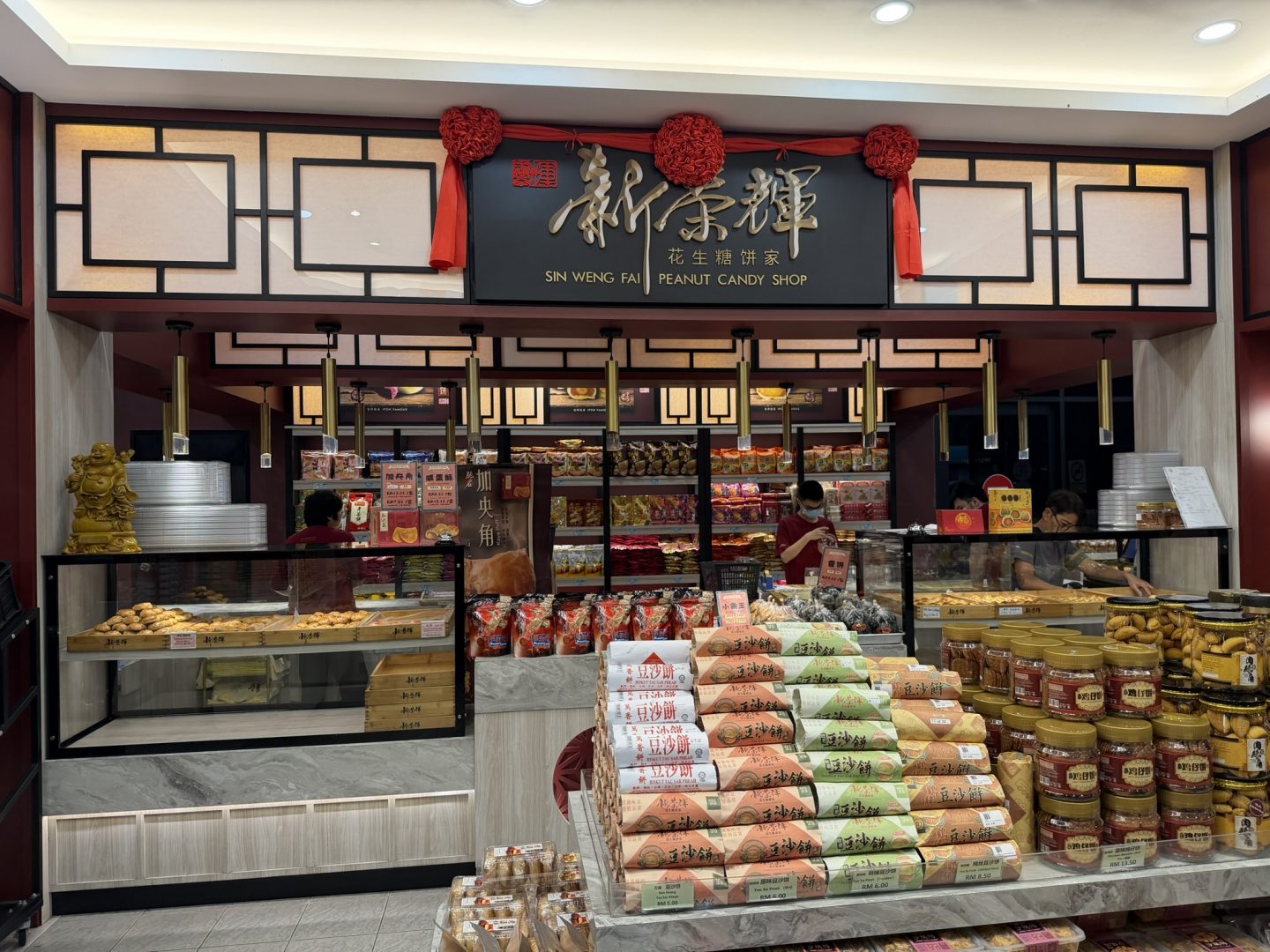
Peanut Candy from Sin Weng Fai
Sin Weng Fai has been around since 1964 and is known for its peanut candy. The candy is made using crushed peanuts bound together with sugar, often made in batches and sold fresh in store.
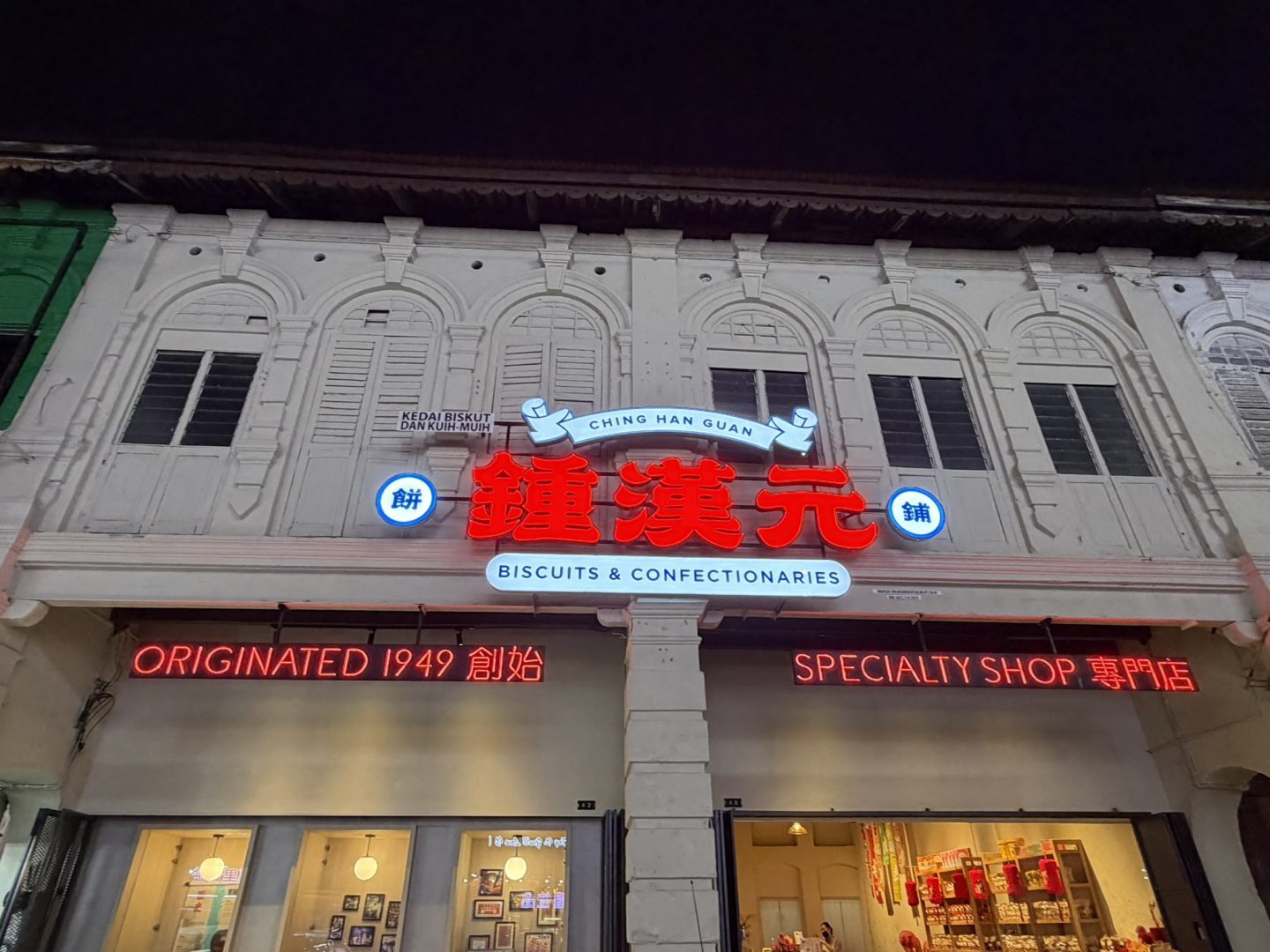
Meat Floss Biscuits from Chin Han Guan
Chin Han Guan dates back to 1948 and is one of the older bakeries in Ipoh, best known for its meat floss biscuits. These are light, flaky pastries filled with savoury pork floss, offering a contrast to the sweeter snacks found elsewhere. The bakery also produces other traditional biscuits, but the meat floss version is one of the most recognisable.
These bakeries are not just about the products themselves, but the fact they have remained largely unchanged. They reflect the kind of everyday food culture that developed during Ipoh’s earlier years and continues to be part of the experience today.
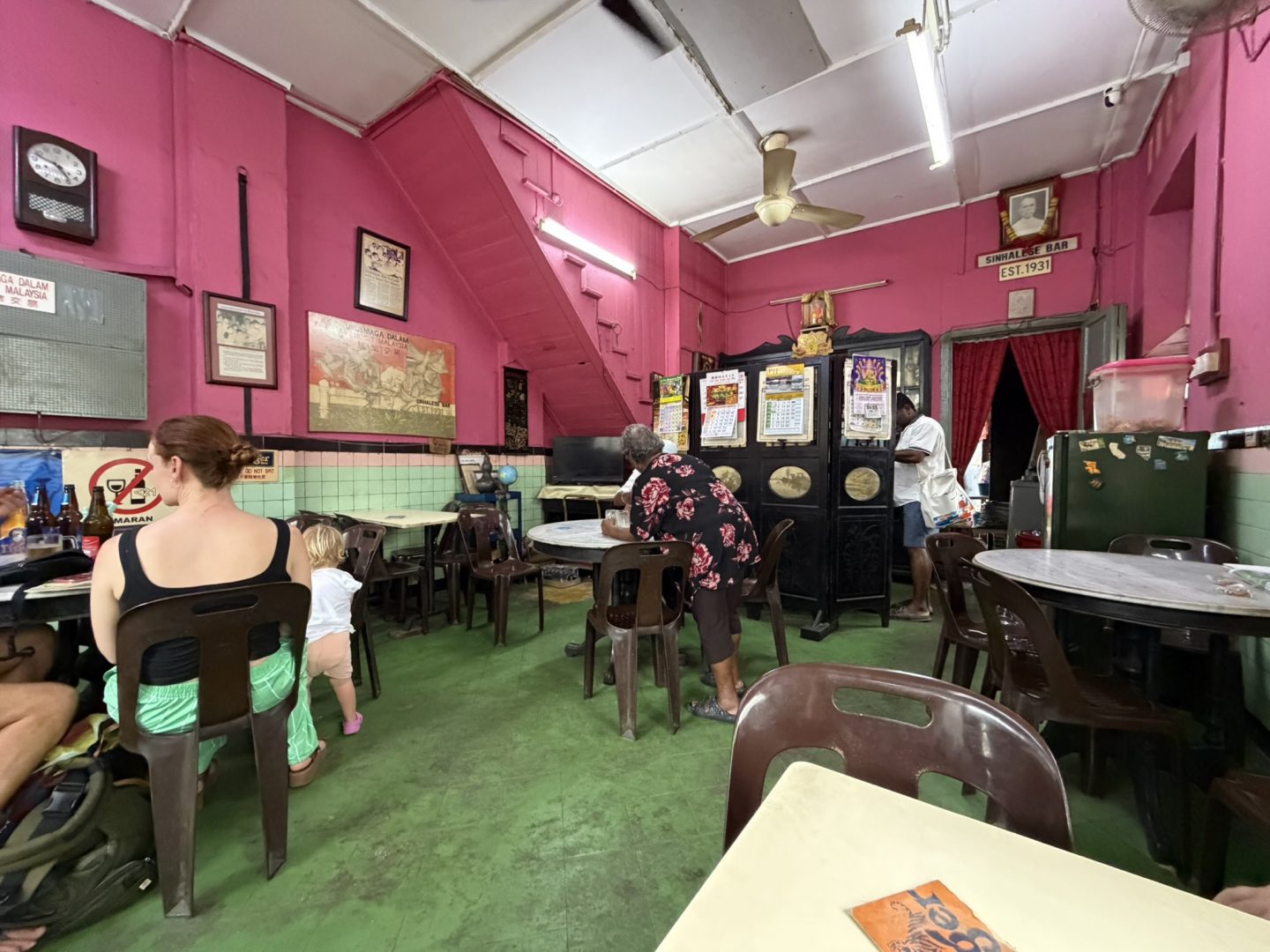
Pre-War Sinhalese Bar
Ipoh’s pre-war Sinhalese Bar has been open since 1931 and is still run by the same family today. We stopped for a drink while waiting out the rain, greeted by Perera and his wife, Kamalavathy. It is basic and no frills, with an unchanged façade since its first day of operations. The saloon doors feel a bit intimidating, but across the threshold it opens into bright pink walls, vintage posters, plastic chairs and a liquor cabinet that looks almost as old as the place itself.
Jalan Leong Sin Nam (Dim Sum Street)
Jalan Leong Sin Nam is known locally as Dim Sum Street because it is lined with several of Ipoh’s most established dim sum restaurants, all located within the same short stretch. Places like Foh San, Ming Court and Yoke Fook Moon have been operating here for decades, building up a strong local following, which is why the area has become associated with dim sum.
Chicken with bean sprouts
The most well known place to try chicken with bean sprouts in Ipoh is Lou Wong, which is usually packed with a constant queue outside. The dish itself is simple, steamed chicken served with crunchy bean sprouts, often alongside rice or Ipoh hor fun. There are a few similar restaurants nearby, including Onn Kee, and in reality they all serve the same dish, so it is more about how long you want to wait rather than finding one “best” spot.
Things to do in Ipoh
Here are the main things to do in Ipoh.
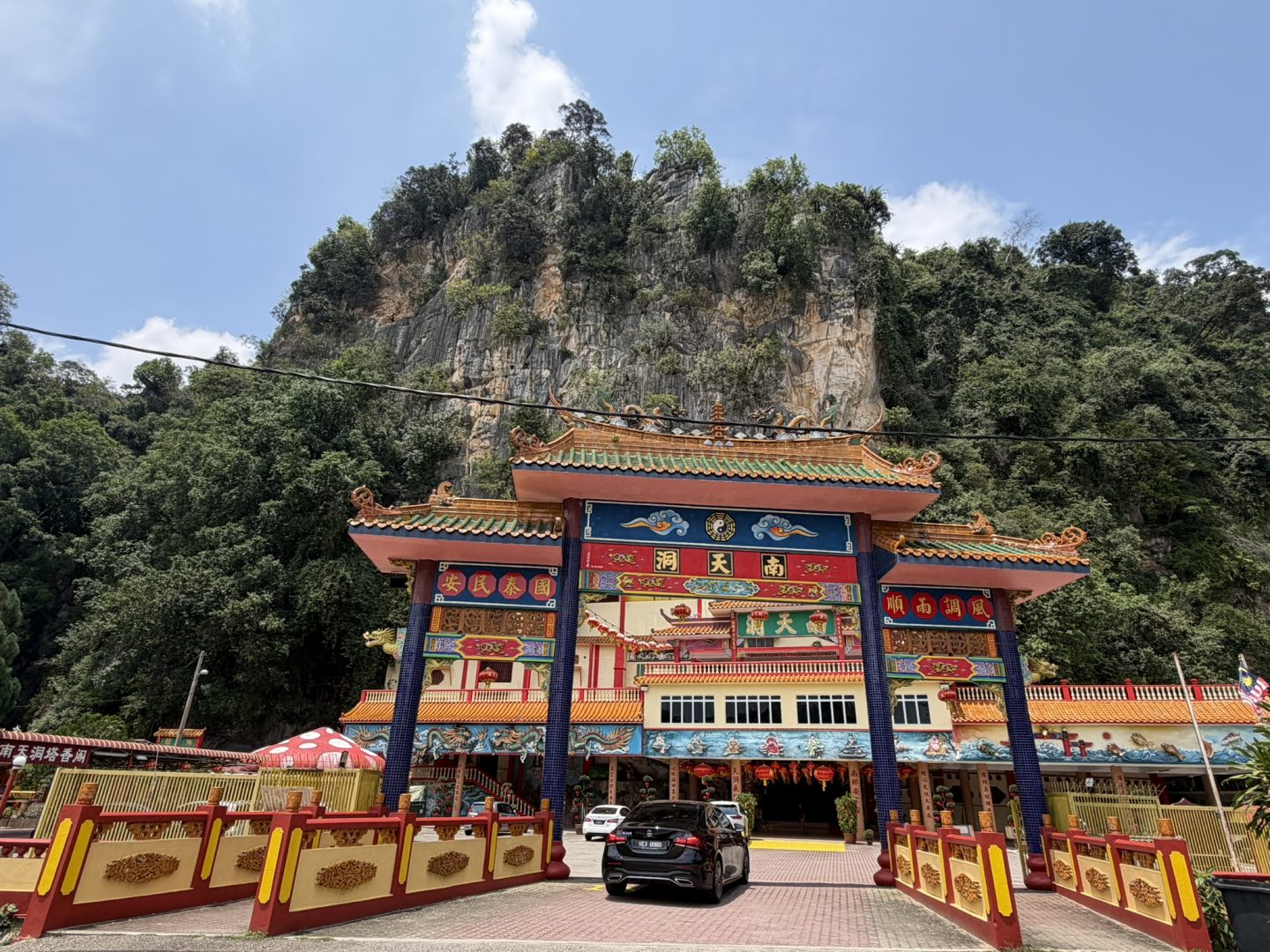
Cave temples
Ipoh’s limestone hills were formed over hundreds of millions of years, many of which now house temples built directly into the rock. They were developed by Chinese settlers who adapted the natural caves into places of worship, and there are now over 30 cave temples spread across the area. We initially planned to visit Kek Lok Tong Cave Temple, but it was closed during our visit. Sam Poh Tong, Nam Thean Tong and Lin Seng Tong are located right next to each other, which makes it easy to visit more than one in a single stop, and they are all easy to reach by Grab if you have the time.
Mural Art Lane
Mural Art Lane is an alley in Ipoh’s New Town that has been turned into an open air street art space, with large scale murals covering the walls. It’s part of a more recent wave of street art in Ipoh, following the success of earlier murals in the Old Town, and feels more concentrated compared to the scattered pieces elsewhere. The artwork here tends to focus on everyday life in Malaysia, with scenes of childhood, local culture and community. It’s easy to walk through in a short amount of time.
Kinta Riverfront Walk
The Kinta River runs through the centre of Ipoh, separating the Old Town from the New Town. In the evening, the area becomes more active, with lights along the river and a slightly livelier atmosphere compared to the daytime. It’s not somewhere you go out of your way for, but it works well as part of walking between different parts of the city, especially if you are already exploring the mural art lane and Old Town nearby.
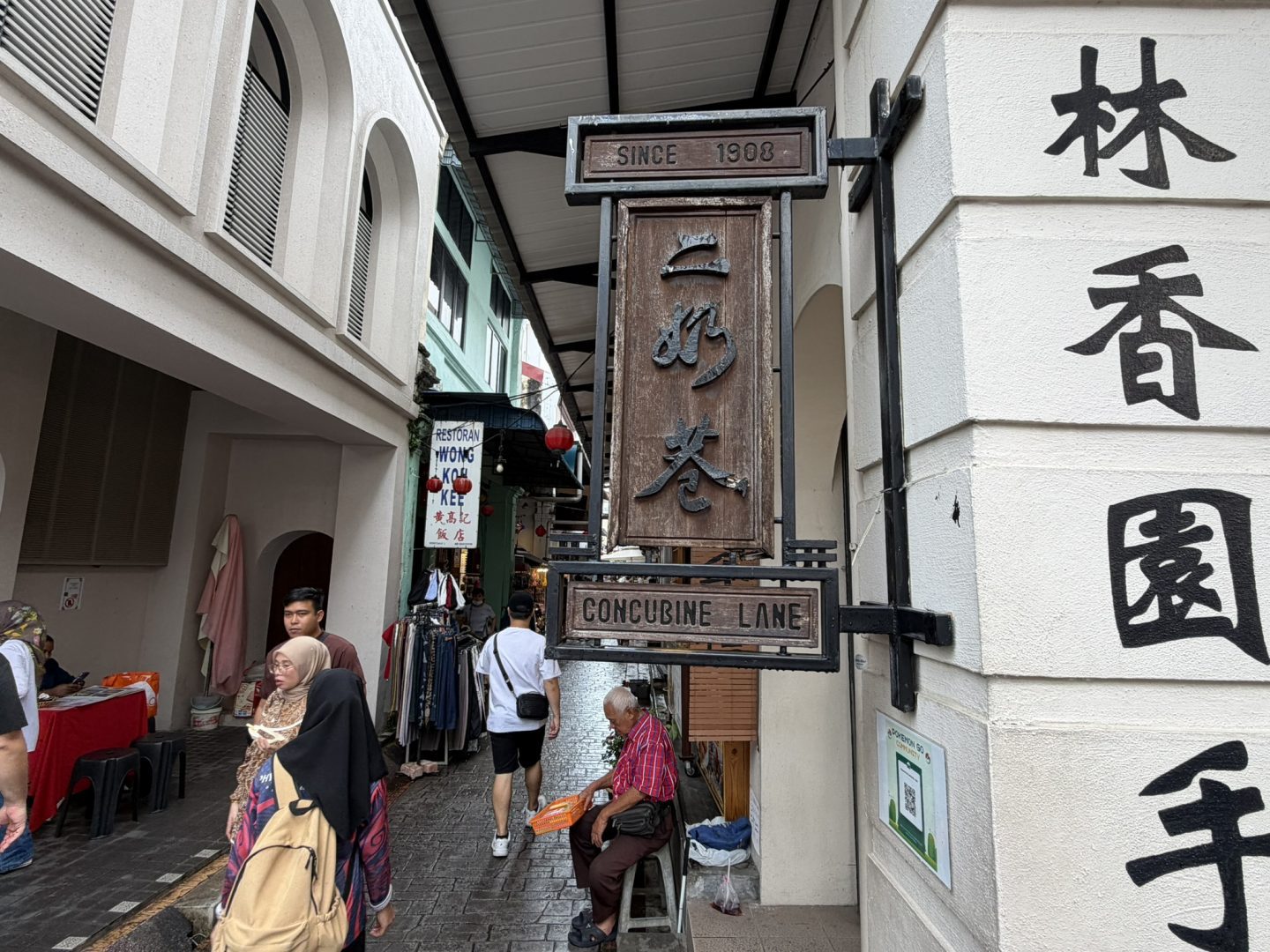
Concubine Lane
Concubine Lane is one of the most well known streets in Ipoh, originally dating back to the early 1900s when it was an area where wealthy tin miners kept their mistresses. Today, it has been redeveloped into a narrow pedestrian lane filled with stalls, shops and cafés.
It’s quite commercial compared to the rest of Ipoh, with a mix of street food, souvenir shops and more modern cafés set within older buildings. One of the more noticeable cafés here is Platform Coffee, a Harry Potter themed café that leans heavily into the theme, with props, costumes and a courtyard.
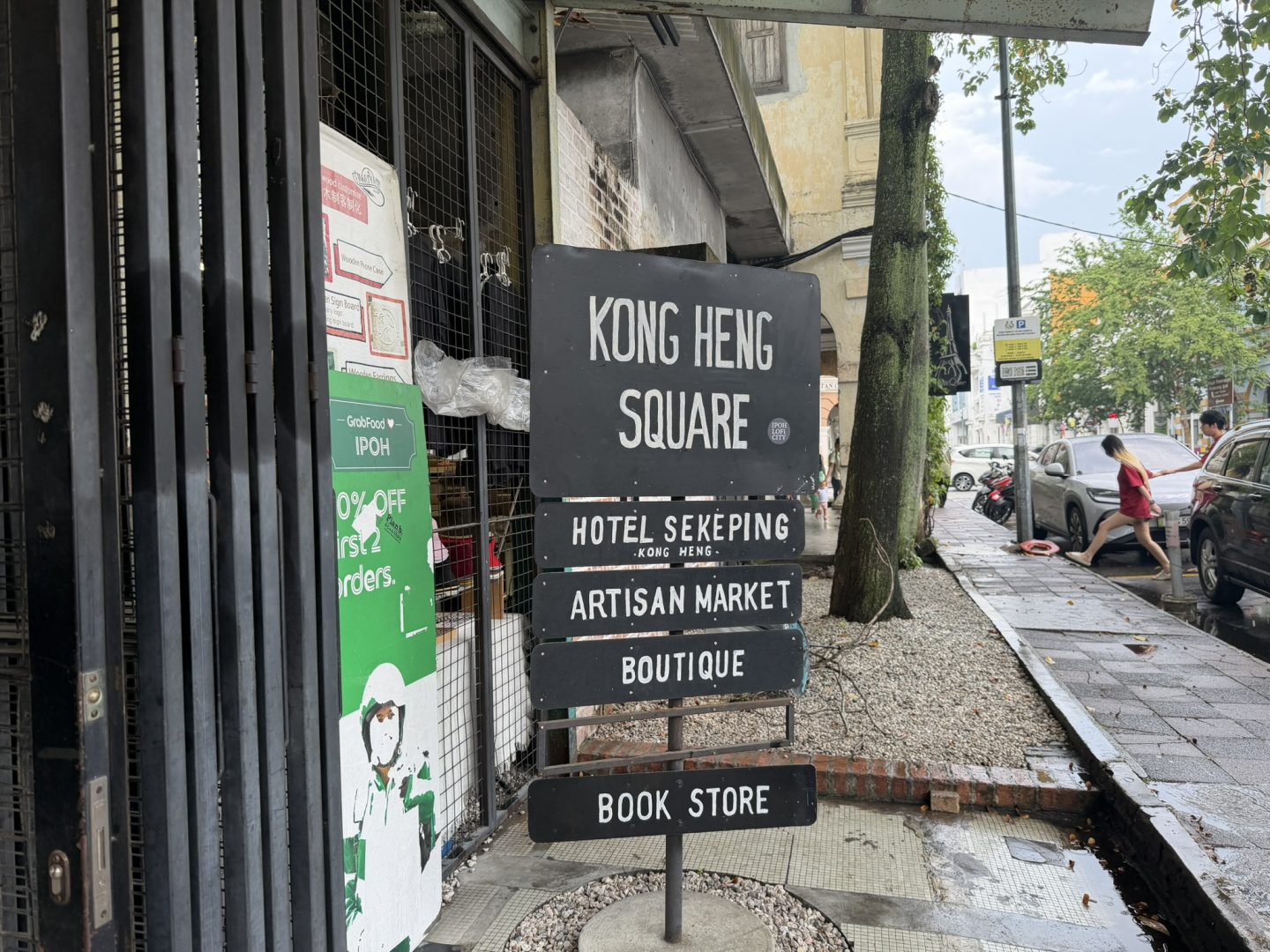
Market Lane and Kong Heng Artisan Market
Market Lane is a quieter stretch just off the main Old Town area, and feels slightly less crowded than places like Concubine Lane. Within this area is the Kong Heng Artisan Market, set inside the courtyard of the old Kong Heng Square building. It’s a small, curated space with independent stalls selling things like handmade goods, jewellery, prints and small souvenirs, alongside a few cafés.
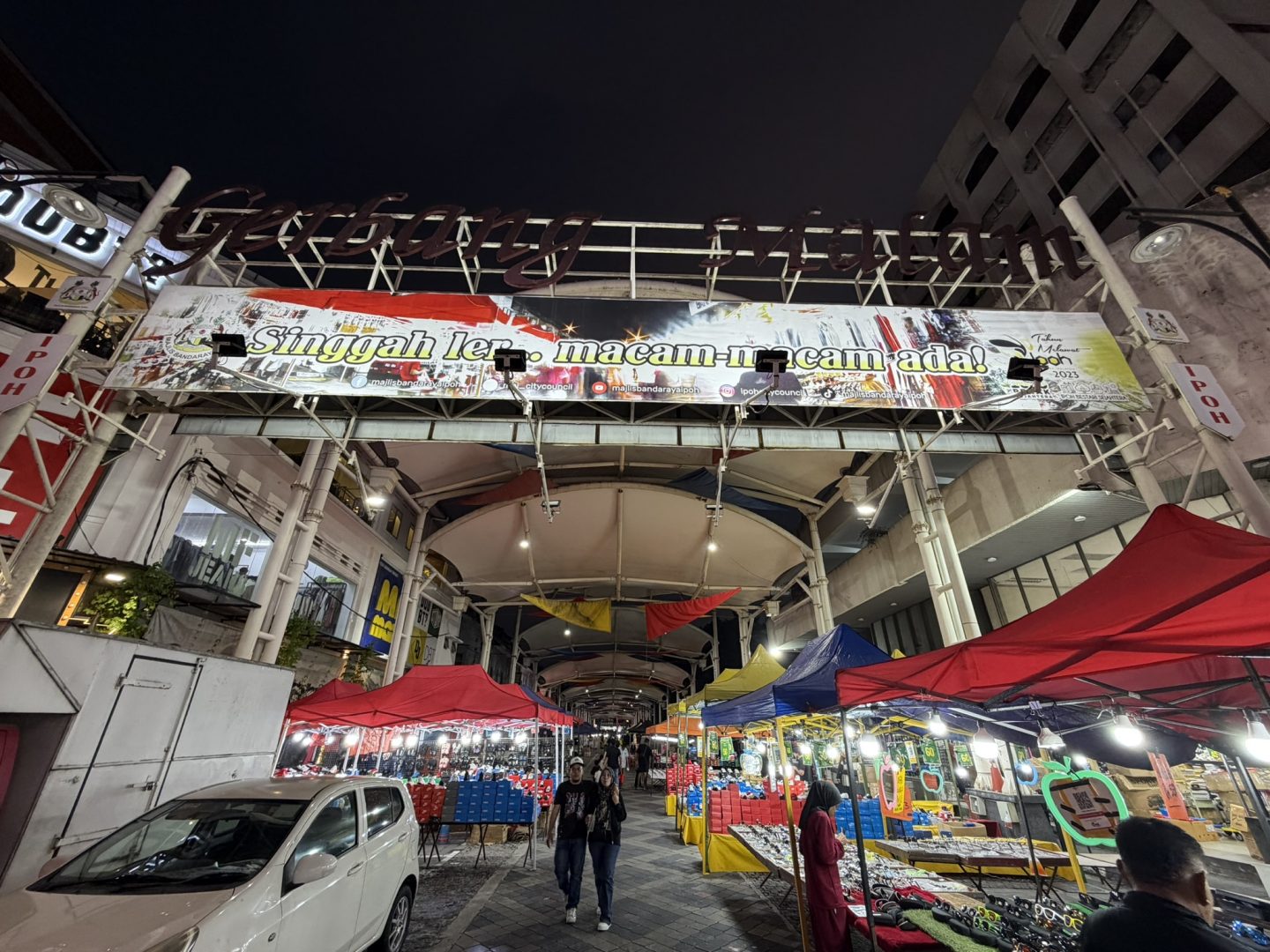
Gerbang Malam Night Market
Gerbang Malam Night Market is one of the main evening markets in Ipoh, located near the Old Town area and easy to stop by after dinner. The name “Gerbang Malam” translates to “night gate”, and it has been part of Ipoh’s evening street life for decades.
The market is made up of small food and snack stalls, selling things like fruit, sweets and local street food, alongside cheaper goods and souvenirs. It is difficult to pinpoint when it really begins, as when we visited around 7pm on a Sunday, stalls were still setting up well into 7:45pm. It is not a large market, but it is a simple way to end the day without needing to plan anything specific.
Getting around Ipoh
Ipoh is easy to get around, and most places are either walkable or a short Grab ride away. For anything further out, including cave temples, Grab is the simplest option and relatively inexpensive.
Is Ipoh worth visiting
If you are travelling through Malaysia, Ipoh fits naturally between Kuala Lumpur, Cameron Highlands and Penang, and works best as part of that route rather than a standalone destination.
The journey is short, it’s simple to get around, and you can see most of what it offers in a day or two. That said, it is not somewhere with a long list of standout attractions, the experience is more about food, cafés and a slower pace rather than major sights. Compared to places like Penang, it offers less variety, but it is also less crowded and easier to explore.
Overall, Ipoh is worth visiting if it fits naturally into your route, especially between Kuala Lumpur and Penang. It works well as a stopover, but it is not somewhere you need to go out of your way for.
If you’re planning your route through Malaysia, this Malaysia travel guide breaks down how to connect places like Kuala Lumpur, Ipoh and Penang into a single trip.
Frequently asked questions
How many days do you need in Ipoh?
One to two days is enough to see the main sights, visit a cave temple and try the local food without rushing.
What is Ipoh known for?
Ipoh is known for its food, particularly white coffee, bean sprout chicken and local pastries, as well as its cave temples and colonial architecture.
How do you get around Ipoh?
Most places are walkable, and Grab is widely available for anything further out.
When is the best time to visit Ipoh?
Ipoh can be visited year round, but mornings and evenings are more comfortable due to the heat.

