If Easter Island is on your bucket list, two nights on Rapa Nui might be all you need. We saw the famous moai up close, visited the quarry where they were carved, explored the island’s main archaeological sites and stood on the edge of a vast volcanic crater.
By making use of our arrival afternoon and booking tours that covered different parts of the island, we fitted a surprising amount into a very short stay. This is the exact 2 day Easter Island itinerary we followed, including how we structured our time, what we saw and what we’d change if we visited again.
This post contains affiliate links and display advertising. If you make a purchase through one of our links, we may earn a small commission at no extra cost to you, which helps support the running of this blog.
Day 1: Arriving on Rapa Nui and exploring the south
We flew direct from Santiago with LATAM, landing at Mataveri Airport around midday. After checking into Cabañas Raupa in Hanga Roa, we headed out on a half day tour of southern Rapa Nui at 14:30. Since our full day tour the following day covered many of the island’s main moai sites, we used our first afternoon to explore a different part of the island instead.
The tour gave us our first proper introduction to Rapa Nui and, importantly, to the parts of its history that go beyond the moai. Starting in the south helped put the island’s timeline into context before we visited the major moai sites the following day, including what came after the period of moai construction.
The main stops were Rano Kau, the enormous volcanic crater at the southern end of the island, and Orongo, the ceremonial village on its rim. This is where we learnt about the Birdman tradition, the offshore islets and some of the petroglyphs that survive around the site.
We booked the half day tour separately because it worked well with our flight time. If you have two full sightseeing days, though, it may make more sense to book a two day Rapa Nui tour. Several people on our tour were doing exactly that, with the southern route forming the first part of their two day itinerary.
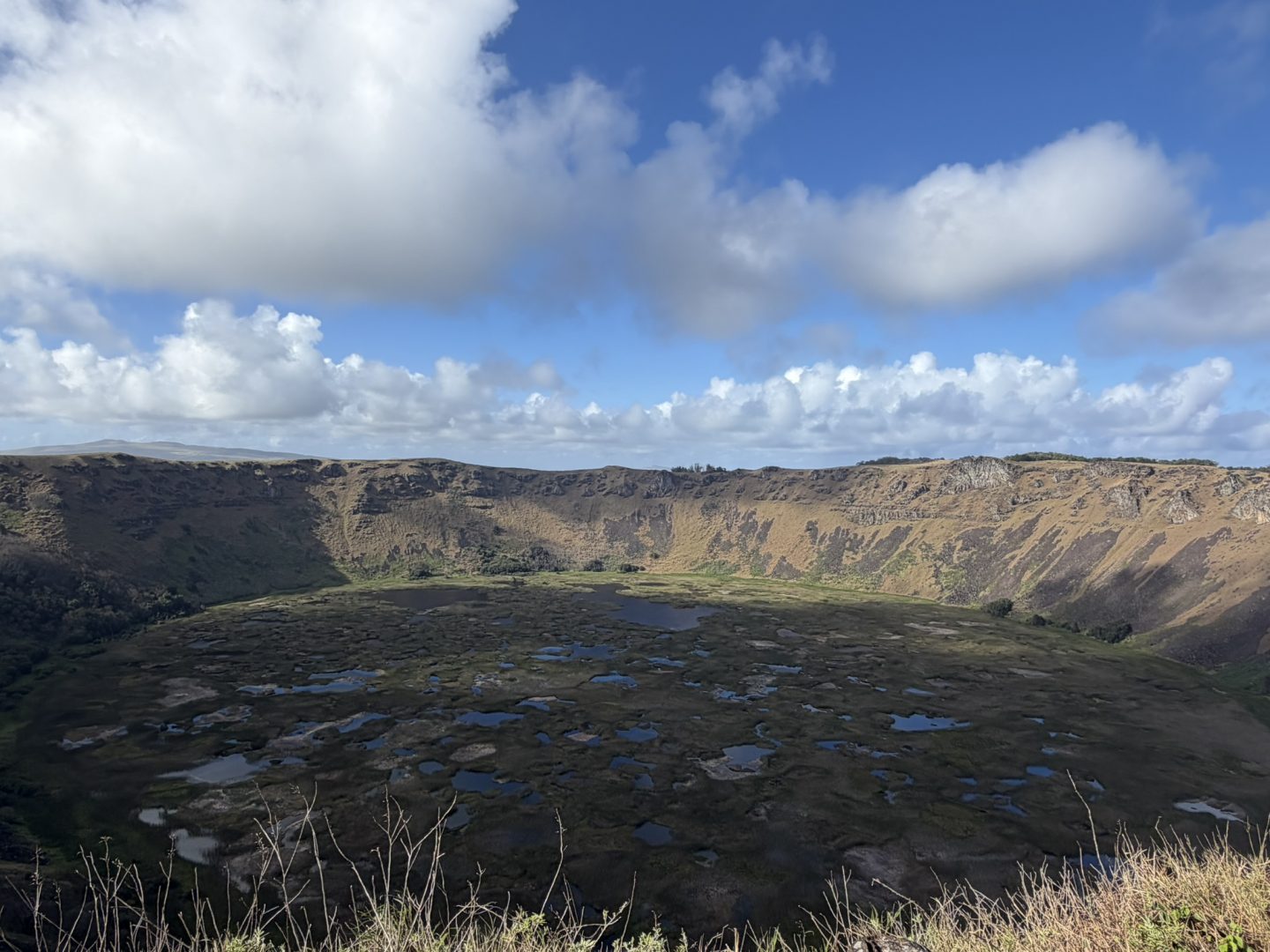
View across the Rano Kau crater on Easter Island
Day 2: Exploring Rapa Nui’s main moai sites
Our second day was our only full sightseeing day, so we booked this full day guided tour covering the eastern and northern sides of Rapa Nui, where many of the island’s major moai and archaeological sites are found. The National Park sites on this route can only be visited with an accredited guide, and you’ll also need a separate Rapa Nui National Park ticket in addition to your tour booking.
UNESCO estimates there are around 900 moai and more than 300 ceremonial platforms across the island, and this route takes you to some of the places where they are most concentrated, including Akahanga, Rano Raraku, Ahu Tongariki, Te Pito Kura and Anakena.
For more on National Park tickets, guide requirements and current site access rules, see our Easter Island Travel Tips: Things to Know Before Visiting Rapa Nui.
One of the highlights was Rano Raraku, the volcanic quarry where most of Rapa Nui’s moai were carved. Hundreds of statues remain around the quarry in different stages of production, so this is where you really start to understand where the moai came from before seeing the finished statues standing on ceremonial platforms around the island. Rano Raraku is also one of the sites you can only enter once per National Park ticket, so make sure it’s included in the tour you book.
From there we continued to Ahu Tongariki, home to the famous line of 15 standing moai facing inland with the Pacific behind them. After seeing the quarry where the statues were carved, arriving at Tongariki gave much more context to what we were seeing.
Our tour continued around the island through several other archaeological sites before reaching Anakena on the north coast. Seeing these places as part of the same route helped us understand how the ahu, settlements, quarry and wider landscape relate to one another.
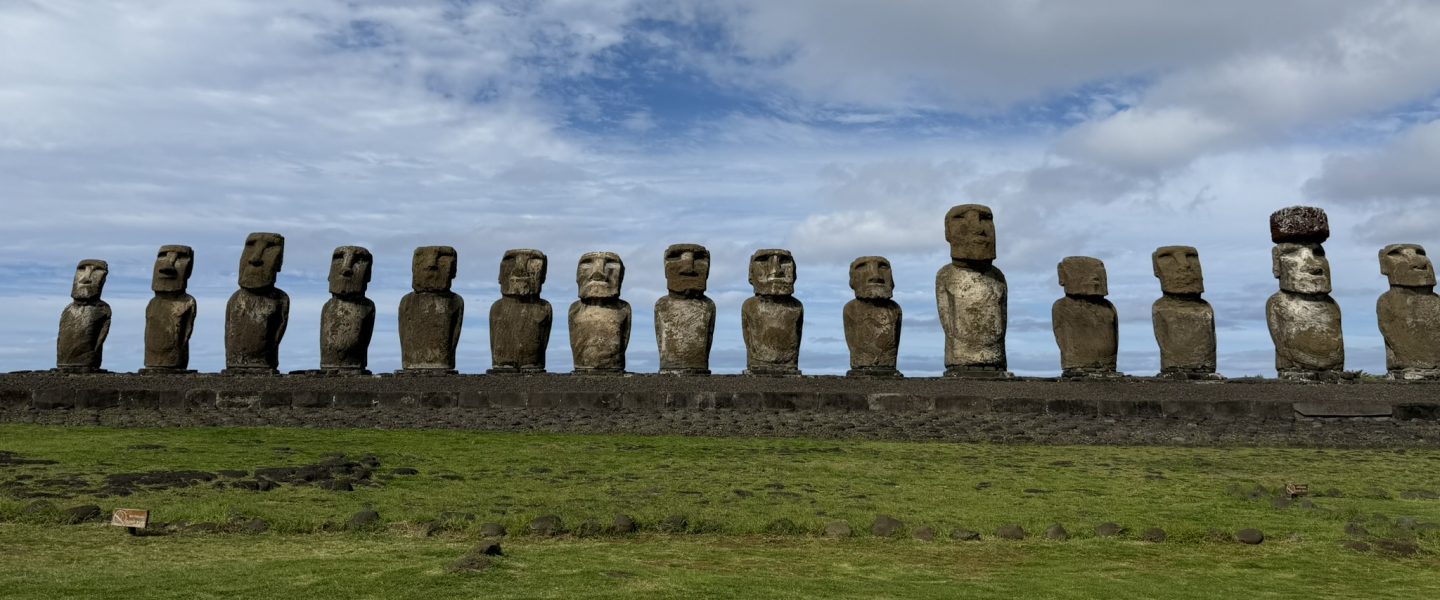
15 moai at Ahu Tongariki
Sunset at Tahai
After the tour, we headed to Tahai, one of the best known places on Rapa Nui to watch the sunset. We went after 18:00 and simply walked straight in. There was no one checking National Park tickets and we didn’t need a guide, which made it an easy thing to do independently at the end of the tour. Access rules can change, so check the latest National Park guidance before you go.
Legends of Rapa Nui Show at Te Moana
We finished the evening at Te Moana for its Legends of Rapa Nui show, an interactive performance that tells stories and legends from the island through traditional music, dance and theatre.
The show draws on Rapa Nui’s Polynesian traditions, using dance, chanting and body painting to bring different legends, clans and parts of island life into the performance. Guests are invited to join in with the dancing, and some are given traditional style face painting as part of the show. You can book the show on its own or add dinner, and there are several similar cultural shows around Rapa Nui.
After spending most of the day exploring archaeological sites, it was a really good way to experience another side of Rapa Nui’s living Polynesian culture through music, dance and storytelling rather than only seeing its history through the moai and ruins.
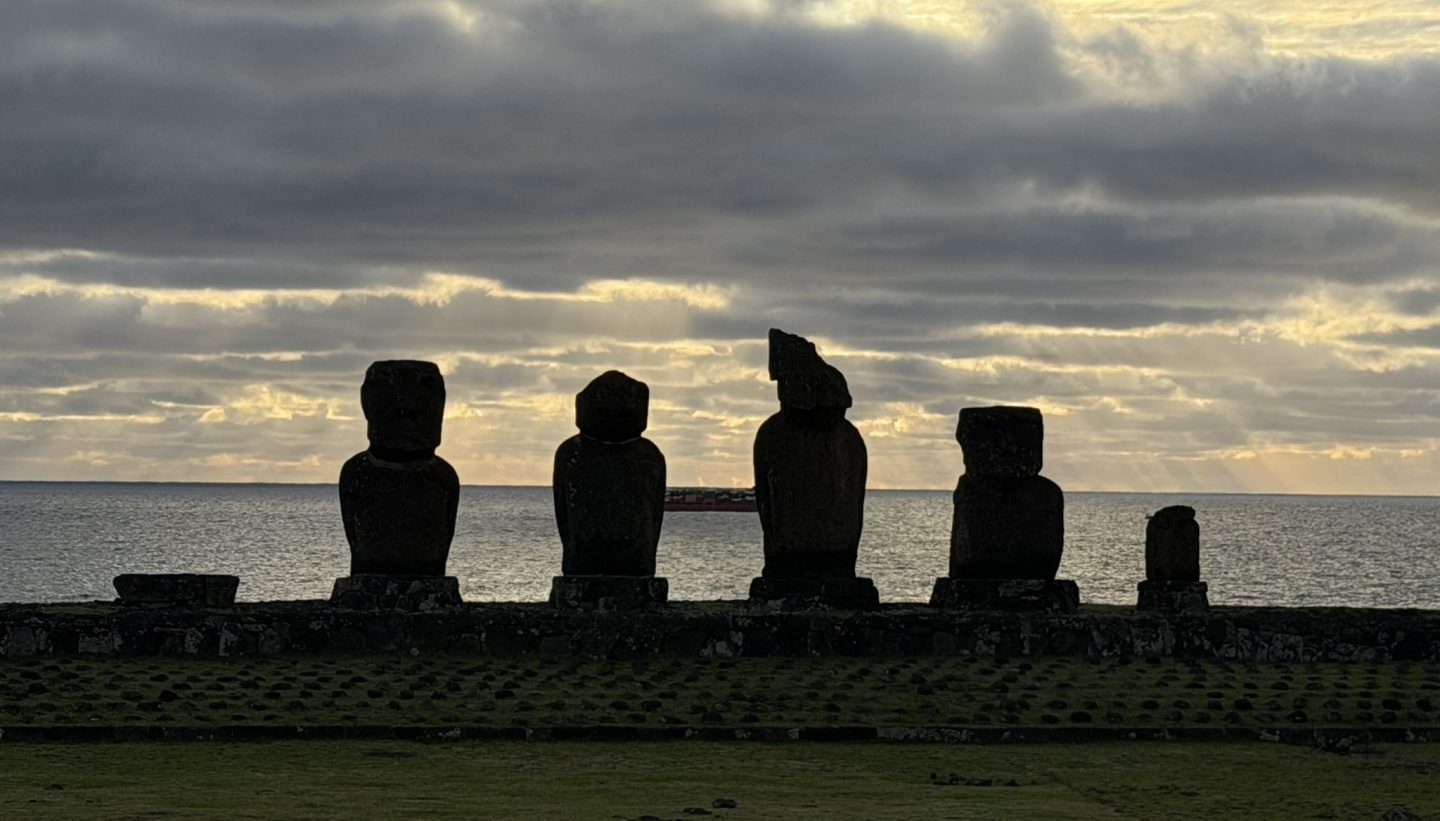
Our final morning on Easter Island
Our flight back to Santiago wasn’t until the afternoon, which gave us a little extra time on our final morning. We had already stopped at Anakena Beach during the previous day’s tour, but didn’t feel we’d had enough time there to properly enjoy it. We could have stayed longer and made our own way back, but we had plans that evening, so instead we used our free time the next morning to return for an hour or so before heading to Mataveri Airport.
If you have a similar afternoon departure, it’s a useful window to fit in something you didn’t get enough time for during your tours. We chose the beach, but you could also use the morning for something like a short boat trip or another activity close to Hanga Roa.
For more ideas, see our Things to Do on Easter Island: The Best Rapa Nui Experiences.
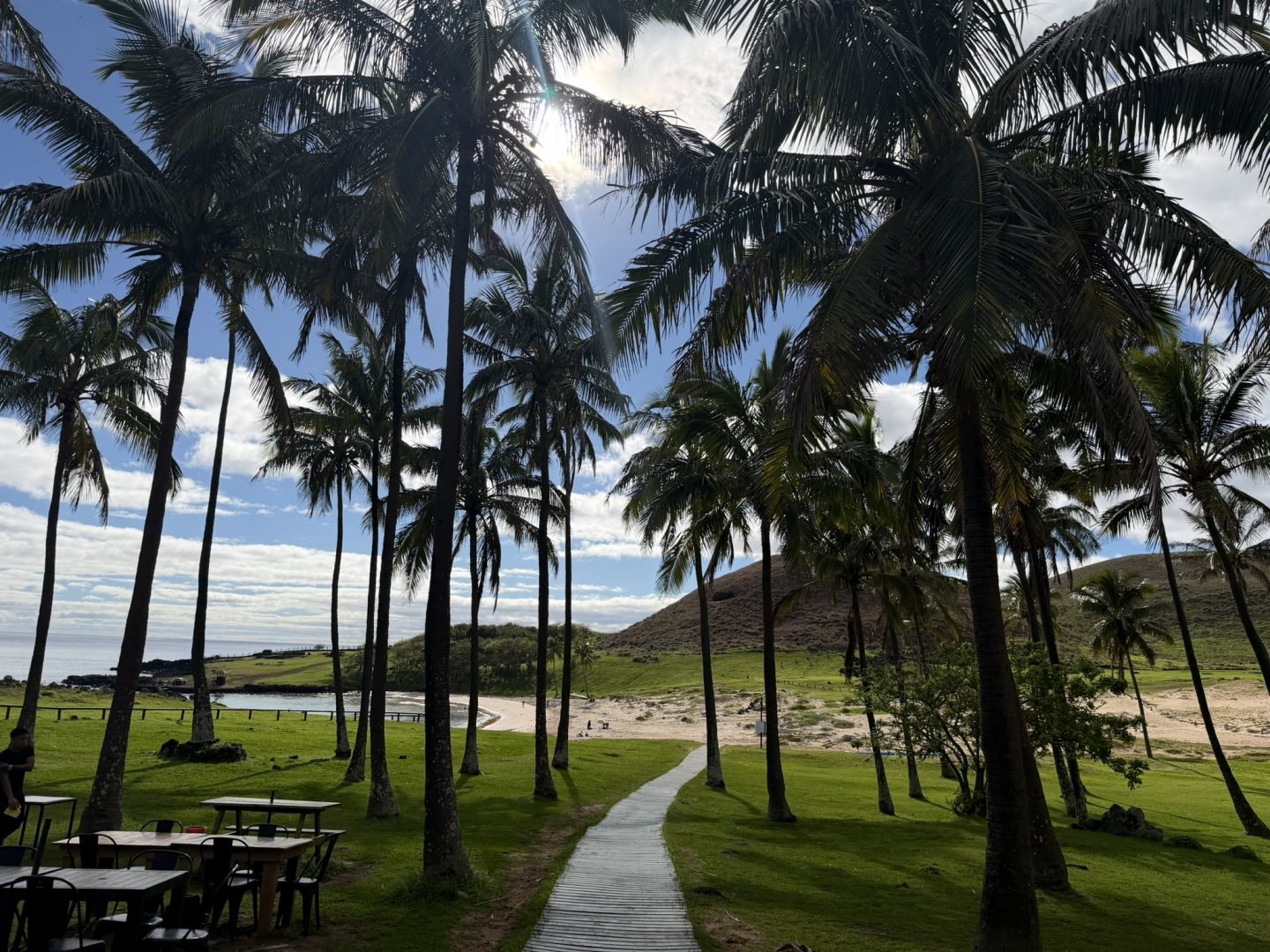
Anakena Beach
Is 2 days enough on Easter Island?
For us, two nights on Easter Island was enough. We saw the moai, visited the main archaeological sites, explored a completely different side of Rapa Nui at Rano Kau and Orongo, experienced some of its living Polynesian culture and still had a little time before flying back to Santiago.
An extra night would obviously give you more freedom to slow down or add other experiences, but if you only have two nights available, I wouldn’t let that put you off. With the right flight times and tours booked in advance, you can see a remarkable amount of Rapa Nui in a very short stay.
For everything you need to organise before you go, see our Easter Island Travel Guide: How to Plan a Trip to Rapa Nui.

